Salome at Palau de Les Arts

IMG_7436

Author:

by Blanca Vázquez

INTERVIEW

Despite the immense recognition that Richard Strauss’s Salome (1905) enjoys today, the opera provoked scandal during its early years: it was banned, censored, and even altered in major cultural centres such as London and New York. Strauss’s colleague and friend Gustav Mahler failed to obtain permission to stage it in Vienna, confessing so to Strauss in a famous letter: “Unfortunately, it is the sad truth. The censors reject it! I am moving heaven and earth to prevent this absurd situation, but it is in vain. I cannot express the enormous impression your opera has made on me. It is your masterpiece and confirms what I have long believed: you are a born dramatist.”

The fusion of biblical imagery, erotic impulse, and sacrificial violence reveals in Salome a profoundly Dionysian undercurrent, where desire and destruction advance inexorably hand in hand. Strauss transforms this decadent universe into a musical experience of overwhelming intensity, driven by a chaotic force that remains deeply unsettling more than a century after the opera’s premiere.

Beyond its historical scandal, however, Salome endures as one of the supreme achievements of musical Expressionism. Its revolutionary harmonic language—densely chromatic, dissonant, and under constant tension—forever transformed twentieth-century operatic dramaturgy. Conceived as a single act of relentless emotional pressure, the score unfolds through a monumental and exquisitely refined orchestration that captures with almost surgical precision the decadent, feverish, and psychological atmosphere of Oscar Wilde’s text.

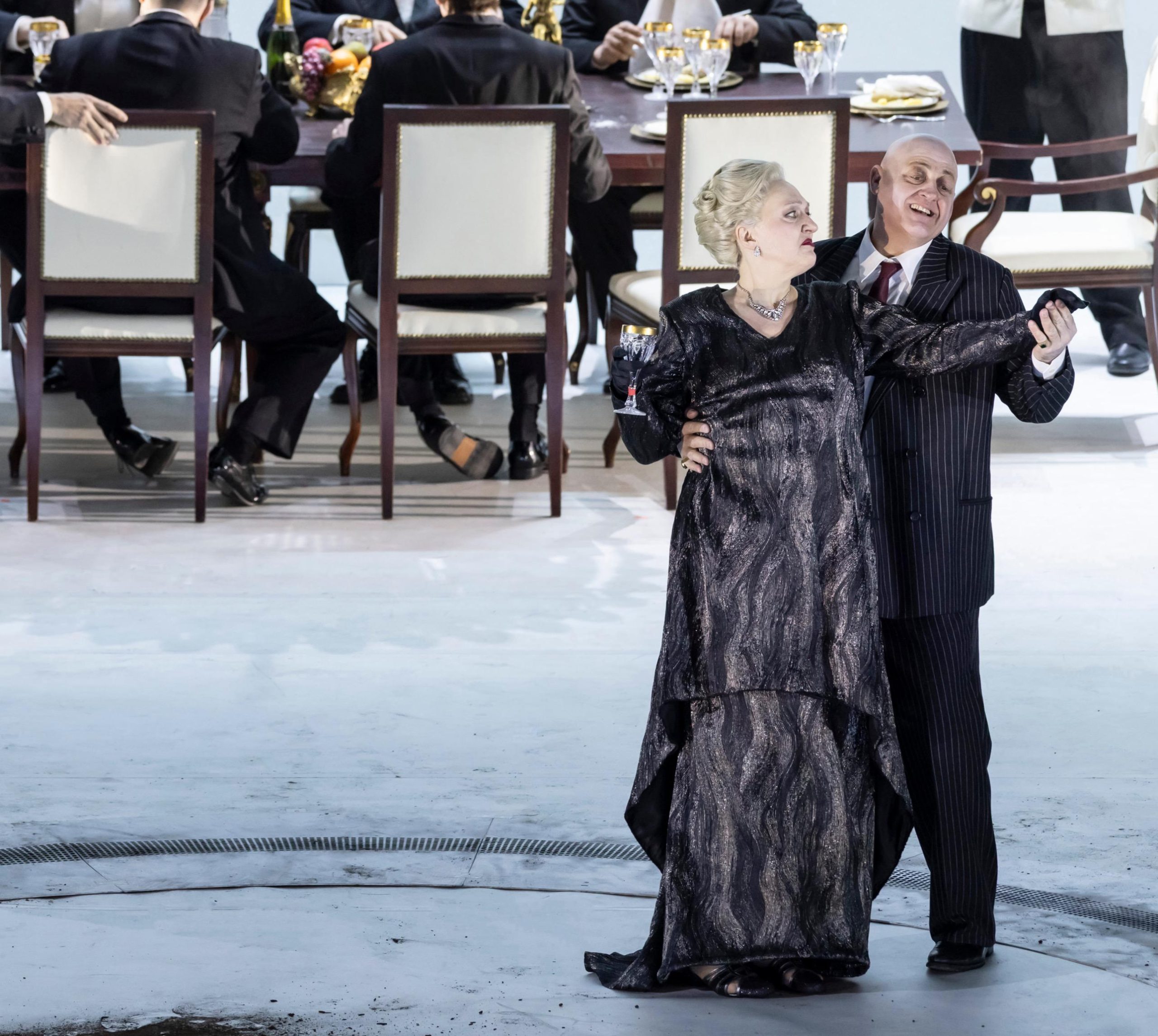
The fascinating performance of Vida Miknevičiūtė impressed not only through the sheer breadth and projection of the voice, but also through the dramatic intelligence with which she shaped a Salome that was complex, sensual, and deeply disturbing. The soprano displayed extraordinary artistic maturity in a role she has already performed at leading European houses such as the Finnish National Opera and Ballet, the Latvian National Opera and Ballet, the Hamburg State Opera, and the Vienna State Opera.

John Daszak also delivered a Herod of immense theatrical impact. His mastery of psychologically extreme and vocally demanding characters resulted in a performance of remarkable intensity, unease, and expressive sophistication. Alongside him, Michaela Schuster created a Herodias of considerable dramatic authority, supported by a mature voice and extensive experience in the German repertoire.

As Jochanaan, Nicholas Brownlee stood out for the nobility of his timbre and the firmness of his vocal delivery, endowing the prophet with an imposing sonic presence. Meanwhile, Christopher Sokolowski offered a particularly personal and tormented Narraboth, intensely underscoring the fatalism that surrounds the character from his very first appearance.

Among the supporting cast, special mention must be made of Lioba Braun, excellent as Herod’s Page, and Jorge Rodríguez-Norton, one of the Jews, who distinguished himself with a richly coloured, well-projected, and musically incisive voice.

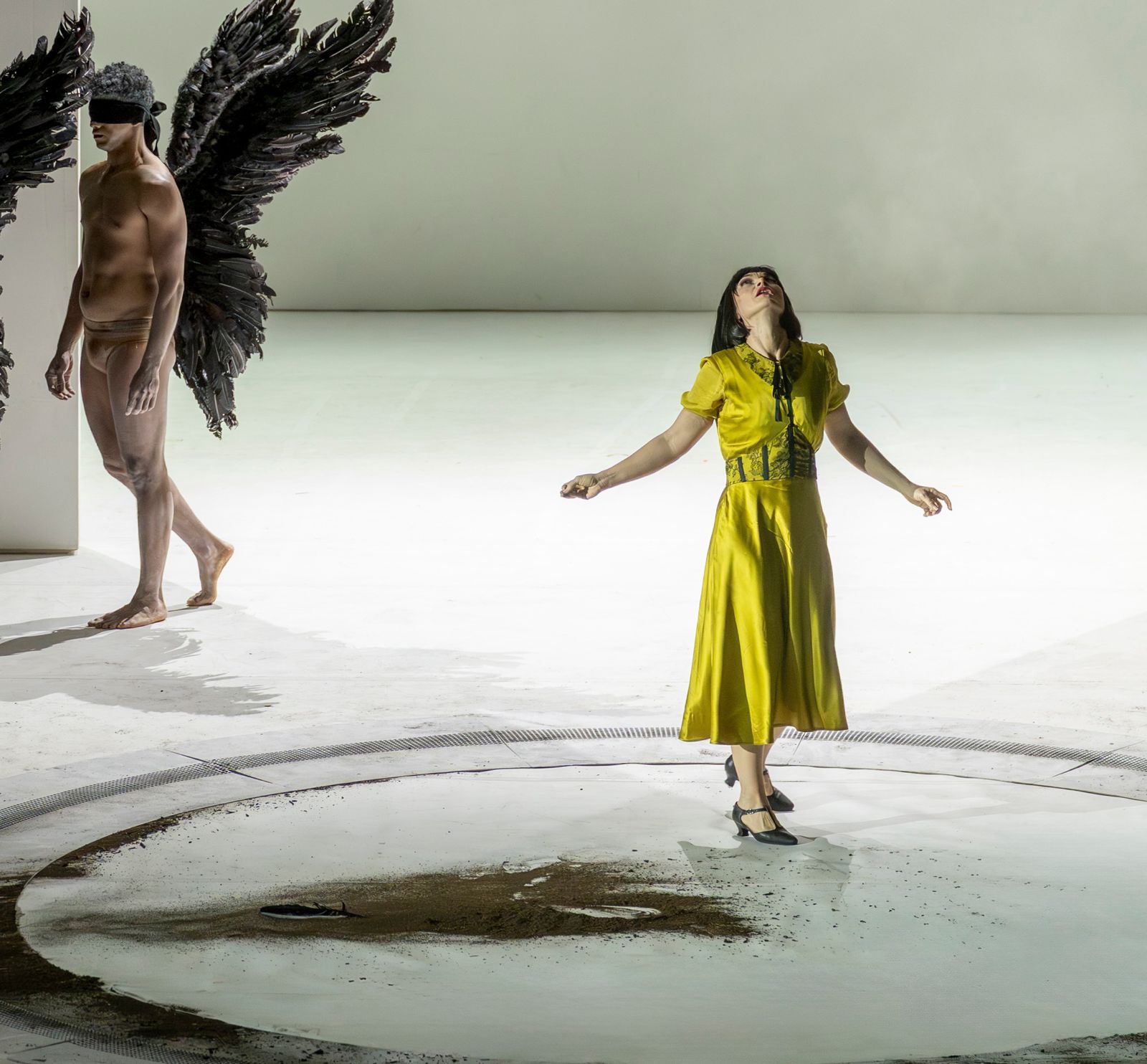
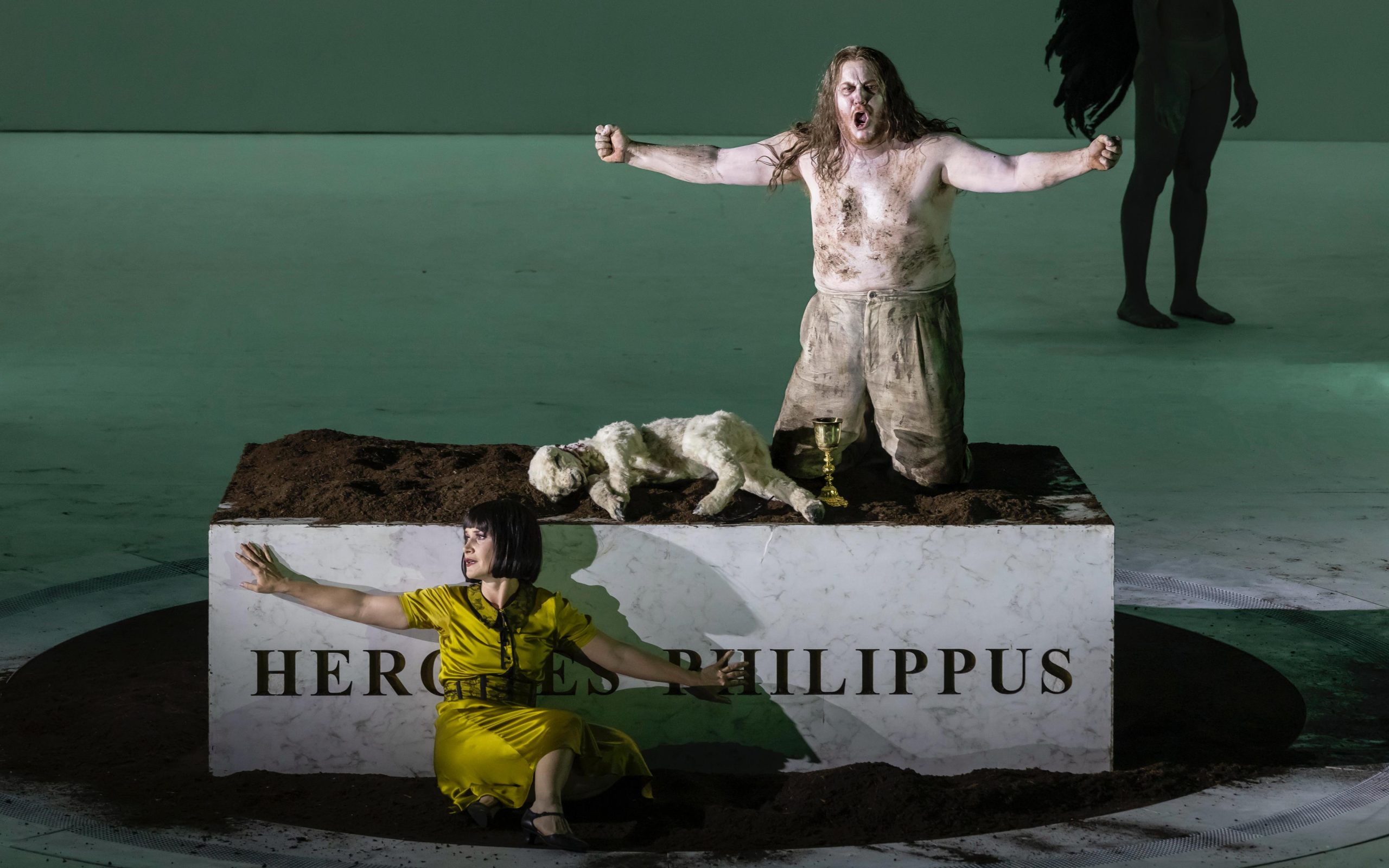
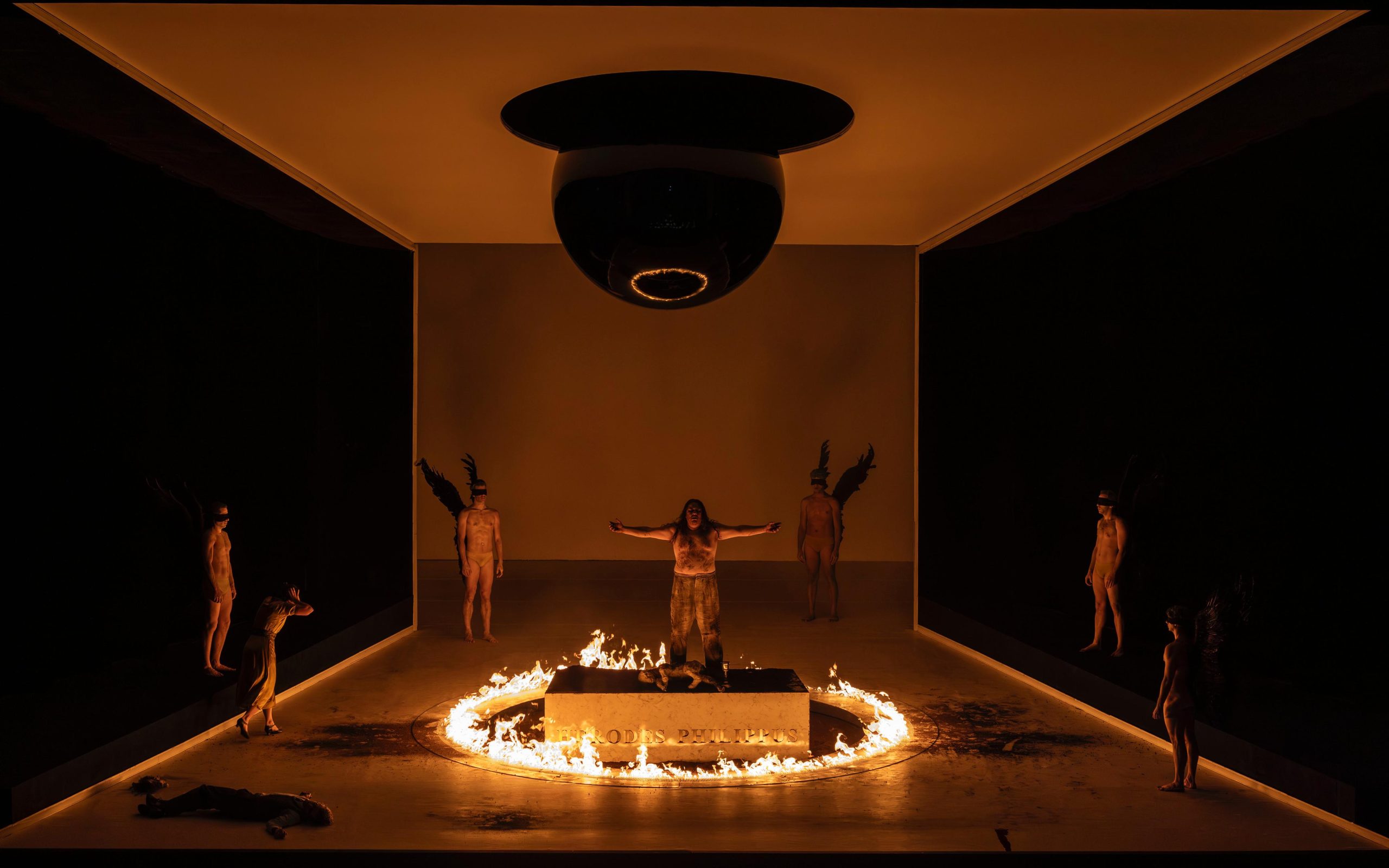
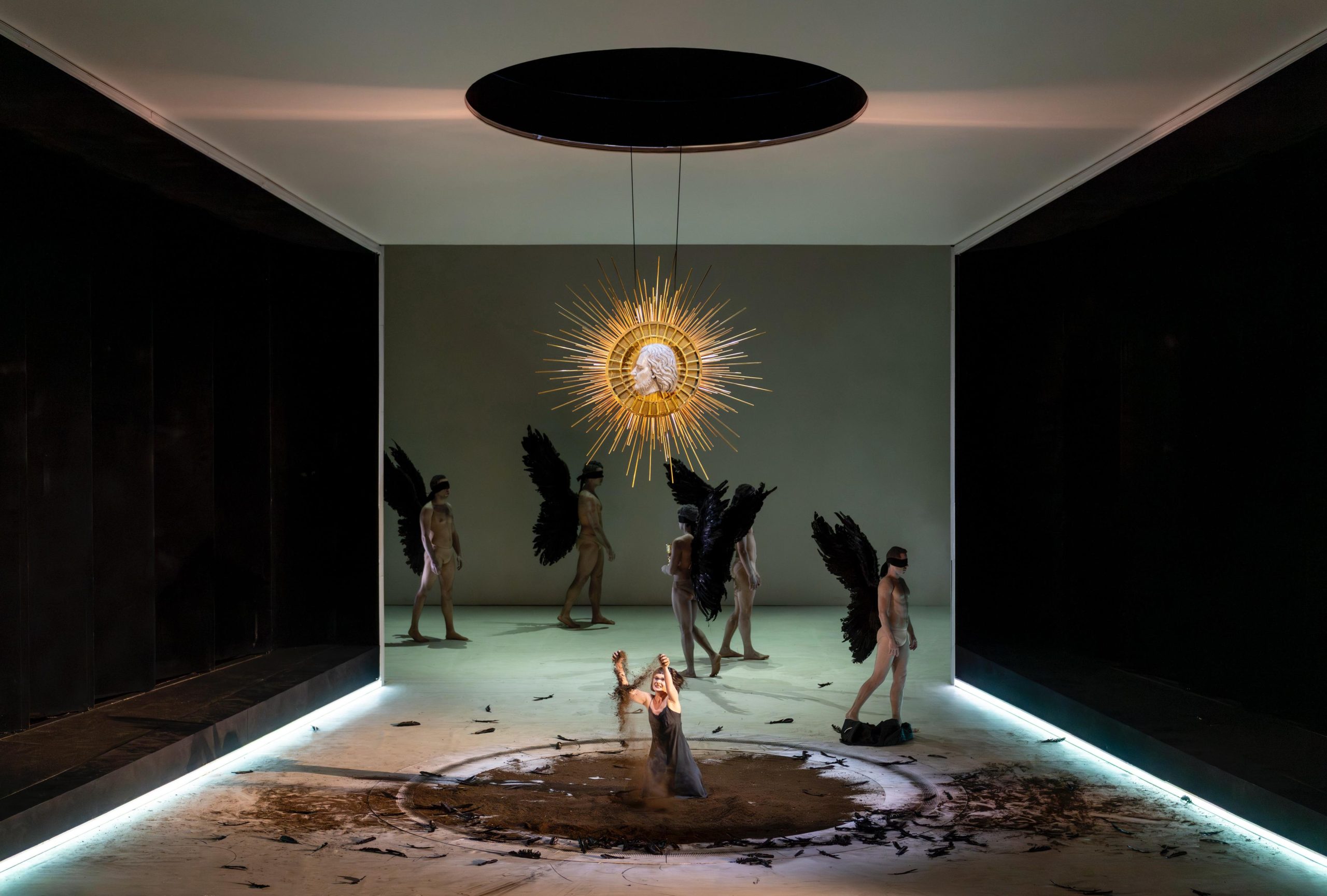
Strauss’s dazzling score found its ideal counterpart in the stage direction of Damiano Michieletto, the architect of a production both solid and richly symbolic. His concept, remarkable for its dramatic clarity, introduced images of striking poetic power: black angels fallen from heaven, flames engulfing Jochanaan’s prison, an imposing dark sphere dominating the stage, and the presence of a young girl functioning as an unsettling double of Salome herself. The set design by Paolo Fantin, built upon an intelligent interplay of contrasts and textures, immersed the audience in an oppressive, dreamlike atmosphere, enhanced by the refined lighting of Alessandro Carletti and the elegant costumes of Carla Teti.

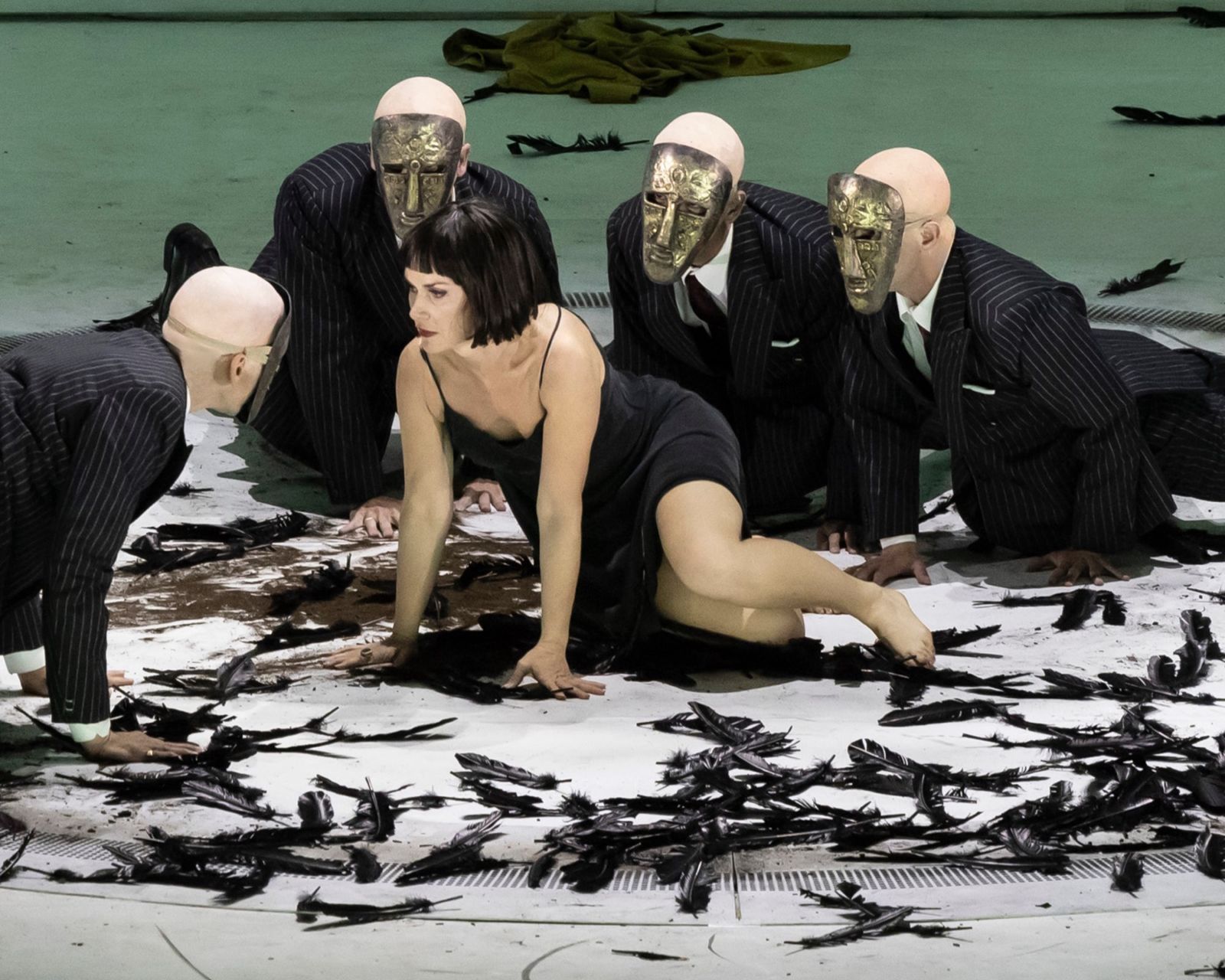
Special mention must also be given to the celebrated “Dance of the Seven Veils,” choreographed by Thomas Wilhelm and conceived here as a disturbing, ritualistic vision culminating in an image of extraordinary theatrical force: an almost mythical Salome surrounded by masked male figures.

If the performance reached such an exceptional level, it was also thanks to the extraordinary work of the Orquestra de la Comunitat Valenciana, an ensemble consistently admirable in the great operatic repertoire. Under the baton of James Gaffigan, the orchestra achieved an exemplary balance between sonic exuberance and expressive subtlety, unleashing moments of genuine exaltation without ever sacrificing transparency or sensitivity. A Salome of the highest musical and theatrical calibre that will undoubtedly remain in the memory of Valencian audiences for a long time to come.

RELATED POSTS

Part II: You cannot starve yourself and expect yourself to sing well
So, what was the turning point for me? I stumbled across this concept called intuitive eating and after following a few certified dietitians on Instagram (such as Colleen Christensen and Bonnie Roney) trying to implement the intuitive eating principles, I knew that I had to dig deeper and find the founder of this concept and...
March 2025
Daria Rybak
Grand Théâtre de Genève: A Masterpiece of Architecture and Elegance
The Grand Théâtre de Genève is one of Switzerland’s most prestigious cultural landmarks, renowned for its rich history and contribution to the world of opera, ballet, and classical music. This historic venue is the beating heart of the city’s opera scene, and whether you’re a seasoned art lover or just curious about the cultural vibe,...
March 2025
Alice Lechner

Alice Lechner

Alice Lechner comes from a music-loving family. Her first encounter with the opera universe was at the tender age of six. The grandeur of the stage productions and costumes, the backstage chatter, and last, but definitely not least, the music left her in awe, beginning with Mozart’s Don Giovanni. The overall feeling that opera awakens in anyone who gets a glimpse into this part of artistic eternity, that each and every day passes the test of time, was what drew her to stay and be a part of this world. The Opera House of Brașov became her second home, and the people who worked there were her second family.

Since then, Alice has devoted her spare time to maximising her musical knowledge through instrumental studies, studying both piano and violin for a short time. In the following years, her number one passion stepped out of the limelight and graciously gave way to Law Studies.
Since 2018 she has been studying Law at “Alexandru Ioan Cuza” University in Iași.

Her passion for opera, even if it is no longer her top professional priority in terms of career, it has most definitely become her priority during her free time. Wanting to experience the best of both worlds and extend her musical horizons, she regularly attends opera performances throughout Romania and abroad.
With OPERA Charm Magazine, Alice aims to nurture her creative side to help it flourish and bloom and to discover, alongside the magazine’s readers, the fascinatingly complex world of opera.

Currently, she is an LL.M. in Business Law at “Alexandru Ioan Cuza” University in Iași.

Oana Zamfir

Oana Zamfir is a second year MA student at the “George Enescu” National University of Arts, at the Department of Musicology.

She studied violin for 12 years at the “Stefan Luchian” High School of Art in Botosani, later focusing on the theoretical aspects of music. In 2019 she completed her bachelor studies in Musicology as a student of the National Academy of Music “Gheorghe Dima” in Cluj-Napoca. Her research during 2018-2019 brought to the forefront elements of the archaic ritual within works of composers who activated during the communist period, giving her the opportunity to start a research internship at the “Carl von Ossietzky” University in Germany. In this context, she recorded conversations with members of the Sophie Drinker Institute in Bremen, and had access to documents directly from the Myriam Marbé archive.

Since 2019 she has been a teacher of Music Education and Theoretical Music Studies, making full use of interactive methods in the musical training of students and working, at the same time, with the children’s choir founded in the first year of her activity.

Her interests include pursuing a degree in interior design in 2020.

Alexandru Suciu

Alexandru Suciu inherited his passion for art growing up in a family of several generations of musicians. He began his musical studies at the “Augustin Bena” School of Music in Cluj, where he studied piano and guitar. Even though his main study direction was philological, his passion for music prevailed. He began his academical journey at the Faculty of Letters of the “Babeș-Bolyai” University, studying Comparative literature and English. He continued by studying Opera Singing at the “Gheorghe Dima” National Music Academy. He also graduated the Musical Education section, followed by Artistic Directing at the Musical Performing Arts department.

His multidisciplinary education opened the doors towards research, which is seen both through his participation in national and international conferences and symposia, such as the Salzburg Easter School PhD-forum, organized by the Salzburg Universität or the Silesian Meeting of Young Scholars, organized by the Institute of English at the University of Silesia, as well as the collaboration with Opera Charm Magazine.

During his student years, he won several prizes, including the Grand Prize at the “Paul Constantinescu” National Musical Interpretation Competition, the Romanian Composers and Musicologists’ Union Prize at the same competition, the First Prize and the Schubert Prize at the “Ada Ulubeanu” Competition.

He further developed his artistic skills by specializing in courses and masterclasses held by personalities such as Vittorio Terranova, Giuseppe Sabbatini, Marian Pop, Ines Salazar, Riccardo Zanellato, Paolo Bosisio, Valentina Farcaș and Manuel Lange in contexts such as the Internationale Sommerakademie für Operngesang Deutschlandsberg, Corso Internazionale di Canto Lirico I.M.C. Licata or the Europäische Akademie für Musik und darstellende Kunst Montepulciano. Besides his activity on-stage, he currently teaches Opera Singing Didactics, and Pedagogical Practice within the Department for Teacher Education and Training at the “Gheorghe Dima” National Music Academy.

Cristina Fieraru

Cristina is a 24 year-old Romanian soprano & a student at the National University of Music Bucharest, where she pursues the MA program in Vocal Performance.

She made her debut in Pamina from “Die Zauberflöte” by Wolfgang Amadeus Mozart at only 19 years old at the Bucharest National Opera House, as a member of the Ludovic Spiess Experimental Opera Studio. Over the years she made her debut in roles such as Contessa d’Almaviva (Le nozze di Figaro), Mimì & Musetta (La Bohème), Alice Ford (Falstaff), Erste Dame (Die Zauberflöte) in her university’s opera productions.
Her passion and experience extends in the field of choral music, too.

She has been part of our dream team since the fall of 2021. For a good period of time she took care of OPERA Charm’s social media and took you on the monthly journey through the history of opera through our Legends rubric – and a few times through the Theaters around the World rubric.

Her little soul rubric – from 2021 to present – is definitely the Conductors of the Future, where, every month, she gives you the chance to meet a young star of the world of conducting and, of course, to find out what’s the most charming feature of opera in these artists’ views.

BIANCA L. NICA

Lorem ipsum dolor sit amet, consetetur sadipscing elitr, sed diam nonumy eirmod tempor invidunt ut labore et dolore magna aliquyam erat, sed diam voluptua. At vero eos et accusam et justo duo dolores et ea rebum. Stet clita kasd gubergren, no sea takimata sanctus est Lorem ipsum dolor sit amet. Lorem ipsum dolor sit amet, consetetur