The Voice That Shook Opera Houses: Boris Christoff

IMG_2522

Author:

by Alice Lechner

INTERVIEW

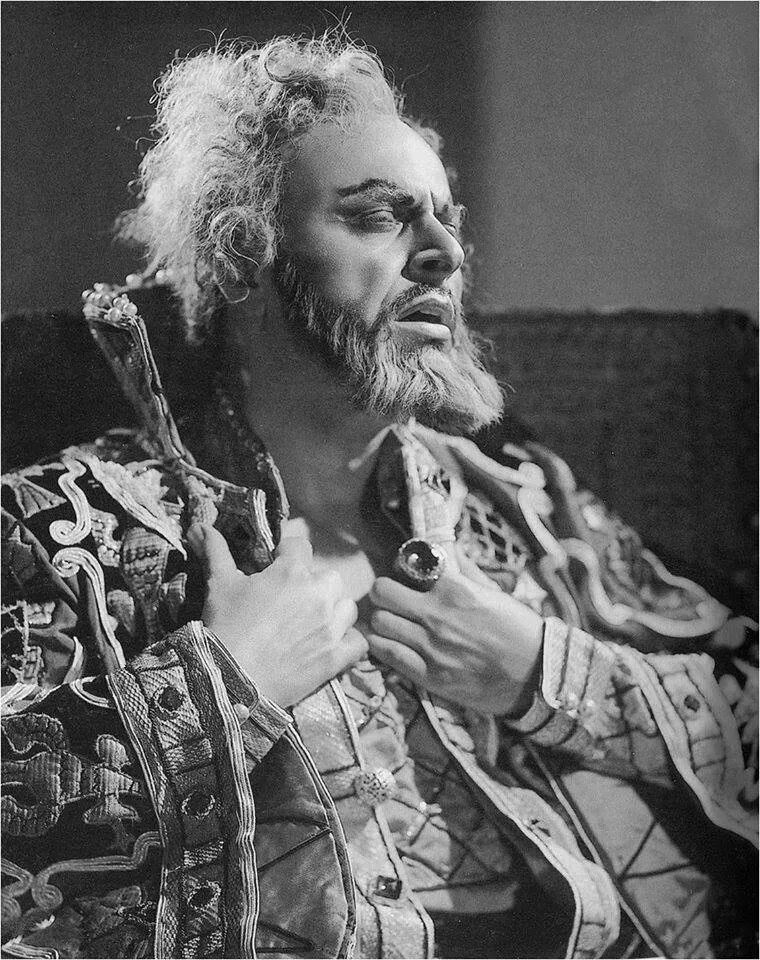
Few opera singers have left behind a voice as unforgettable as Boris Christoff. Deep, dark, and commanding, Christoff didn’t simply sing—he dominated the stage. Audiences described his performances as electrifying, with a voice so powerful it seemed to vibrate through the walls of the theater. Even today, decades after his death, many opera lovers still consider him one of the greatest bass singers of all time.

Born in Bulgaria in 1914, Christoff’s path to opera was anything but ordinary. Before stepping into the spotlight, he studied law and even considered a completely different career. Music, however, proved impossible to resist. After joining a choir in Sofia, his extraordinary talent quickly became impossible to ignore. A scholarship later took him to Italy, where he trained rigorously and developed the rich vocal style that would make him famous across Europe. Under the guidance of renowned teachers, he refined not only his vocal technique but also the dramatic intensity that would later define his career.

Christoff’s rise after World War II was dramatic. He conquered legendary stages like Teatro alla Scala and Royal Opera House, earning admiration for both his voice and his intense acting ability. Unlike many opera singers of his era, Christoff approached every role like a theatrical performance. He studied his characters obsessively, bringing emotional depth and psychological complexity to the stage. Critics frequently praised his ability to transform historical and fictional figures into living, breathing personalities filled with emotion and conflict.

One role became forever linked to his name: Boris Godunov. Christoff’s interpretation of the troubled Russian tsar was so convincing that critics called it definitive. In one astonishing production, he even performed three separate roles in the same opera — a rare achievement requiring exceptional vocal control and dramatic versatility. Few singers before or since have managed it so convincingly. His understanding of Russian repertoire was especially admired, and many listeners believed his voice possessed the ideal color and gravity for the great Slavic operatic roles.

Beyond Russian opera, Christoff also excelled in the works of composers such as Giuseppe Verdi and Wolfgang Amadeus Mozart. Whether portraying kings, priests, or villains, he brought the same level of intensity and detail to every performance. His portrayals often balanced immense authority with surprising vulnerability, allowing audiences to see the humanity beneath even the most imposing characters. This emotional realism helped distinguish him from many of his contemporaries.

But Christoff’s career was also shaped by politics. During the Cold War, tensions between East and West sometimes restricted his travel and performances. In one famous incident, he was denied entry to the United States because of political concerns linked to his Bulgarian background. Yet the barriers only added to his mystique. While governments limited his movement, his recordings traveled freely around the world, turning him into an international legend. For many opera lovers who never had the chance to see him live, those recordings became treasured documents of one of the century’s most extraordinary voices.

Offstage, Christoff was known as passionate, perfectionistic, and fiercely dedicated to his craft. He demanded emotional honesty in every performance and was said to rehearse tirelessly until every phrase carried exactly the right intensity. Colleagues admired him, though some also found him intimidating—much like the powerful characters he portrayed on stage. Despite his imposing reputation, those close to him often described a deeply cultured and thoughtful man devoted entirely to music and artistic excellence.

As recording technology expanded during the mid-20th century, Christoff’s fame reached far beyond Europe’s opera houses. His interpretations circulated through radio broadcasts and vinyl records, introducing new generations to the grandeur of opera. Young bass singers studied his phrasing, diction, and dramatic instincts, while critics continued to regard his performances as benchmarks of the repertory. Even today, many of his recordings remain definitive versions for collectors and opera enthusiasts alike.

Today, Boris Christoff remains more than an opera singer; he is a symbol of artistic force. His recordings continue to inspire young performers, and his voice — dark, thunderous, and deeply human — still captivates listeners generations later.

RELATED POSTS

Part II: You cannot starve yourself and expect yourself to sing well
So, what was the turning point for me? I stumbled across this concept called intuitive eating and after following a few certified dietitians on Instagram (such as Colleen Christensen and Bonnie Roney) trying to implement the intuitive eating principles, I knew that I had to dig deeper and find the founder of this concept and...
March 2025
Daria Rybak
Grand Théâtre de Genève: A Masterpiece of Architecture and Elegance
The Grand Théâtre de Genève is one of Switzerland’s most prestigious cultural landmarks, renowned for its rich history and contribution to the world of opera, ballet, and classical music. This historic venue is the beating heart of the city’s opera scene, and whether you’re a seasoned art lover or just curious about the cultural vibe,...
March 2025
Alice Lechner

Alice Lechner

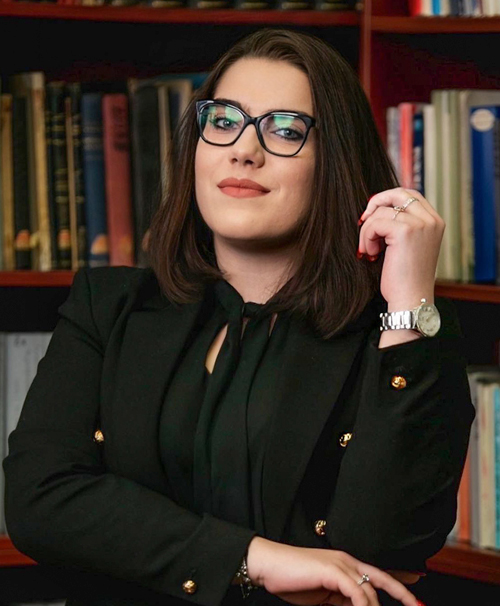
Alice Lechner comes from a music-loving family. Her first encounter with the opera universe was at the tender age of six. The grandeur of the stage productions and costumes, the backstage chatter, and last, but definitely not least, the music left her in awe, beginning with Mozart’s Don Giovanni. The overall feeling that opera awakens in anyone who gets a glimpse into this part of artistic eternity, that each and every day passes the test of time, was what drew her to stay and be a part of this world. The Opera House of Brașov became her second home, and the people who worked there were her second family.

Since then, Alice has devoted her spare time to maximising her musical knowledge through instrumental studies, studying both piano and violin for a short time. In the following years, her number one passion stepped out of the limelight and graciously gave way to Law Studies.
Since 2018 she has been studying Law at “Alexandru Ioan Cuza” University in Iași.

Her passion for opera, even if it is no longer her top professional priority in terms of career, it has most definitely become her priority during her free time. Wanting to experience the best of both worlds and extend her musical horizons, she regularly attends opera performances throughout Romania and abroad.
With OPERA Charm Magazine, Alice aims to nurture her creative side to help it flourish and bloom and to discover, alongside the magazine’s readers, the fascinatingly complex world of opera.

Currently, she is an LL.M. in Business Law at “Alexandru Ioan Cuza” University in Iași.

Oana Zamfir

Oana Zamfir is a second year MA student at the “George Enescu” National University of Arts, at the Department of Musicology.

She studied violin for 12 years at the “Stefan Luchian” High School of Art in Botosani, later focusing on the theoretical aspects of music. In 2019 she completed her bachelor studies in Musicology as a student of the National Academy of Music “Gheorghe Dima” in Cluj-Napoca. Her research during 2018-2019 brought to the forefront elements of the archaic ritual within works of composers who activated during the communist period, giving her the opportunity to start a research internship at the “Carl von Ossietzky” University in Germany. In this context, she recorded conversations with members of the Sophie Drinker Institute in Bremen, and had access to documents directly from the Myriam Marbé archive.

Since 2019 she has been a teacher of Music Education and Theoretical Music Studies, making full use of interactive methods in the musical training of students and working, at the same time, with the children’s choir founded in the first year of her activity.

Her interests include pursuing a degree in interior design in 2020.

Alexandru Suciu

Alexandru Suciu inherited his passion for art growing up in a family of several generations of musicians. He began his musical studies at the “Augustin Bena” School of Music in Cluj, where he studied piano and guitar. Even though his main study direction was philological, his passion for music prevailed. He began his academical journey at the Faculty of Letters of the “Babeș-Bolyai” University, studying Comparative literature and English. He continued by studying Opera Singing at the “Gheorghe Dima” National Music Academy. He also graduated the Musical Education section, followed by Artistic Directing at the Musical Performing Arts department.

His multidisciplinary education opened the doors towards research, which is seen both through his participation in national and international conferences and symposia, such as the Salzburg Easter School PhD-forum, organized by the Salzburg Universität or the Silesian Meeting of Young Scholars, organized by the Institute of English at the University of Silesia, as well as the collaboration with Opera Charm Magazine.

During his student years, he won several prizes, including the Grand Prize at the “Paul Constantinescu” National Musical Interpretation Competition, the Romanian Composers and Musicologists’ Union Prize at the same competition, the First Prize and the Schubert Prize at the “Ada Ulubeanu” Competition.

He further developed his artistic skills by specializing in courses and masterclasses held by personalities such as Vittorio Terranova, Giuseppe Sabbatini, Marian Pop, Ines Salazar, Riccardo Zanellato, Paolo Bosisio, Valentina Farcaș and Manuel Lange in contexts such as the Internationale Sommerakademie für Operngesang Deutschlandsberg, Corso Internazionale di Canto Lirico I.M.C. Licata or the Europäische Akademie für Musik und darstellende Kunst Montepulciano. Besides his activity on-stage, he currently teaches Opera Singing Didactics, and Pedagogical Practice within the Department for Teacher Education and Training at the “Gheorghe Dima” National Music Academy.

Cristina Fieraru

Cristina is a 24 year-old Romanian soprano & a student at the National University of Music Bucharest, where she pursues the MA program in Vocal Performance.

She made her debut in Pamina from “Die Zauberflöte” by Wolfgang Amadeus Mozart at only 19 years old at the Bucharest National Opera House, as a member of the Ludovic Spiess Experimental Opera Studio. Over the years she made her debut in roles such as Contessa d’Almaviva (Le nozze di Figaro), Mimì & Musetta (La Bohème), Alice Ford (Falstaff), Erste Dame (Die Zauberflöte) in her university’s opera productions.
Her passion and experience extends in the field of choral music, too.

She has been part of our dream team since the fall of 2021. For a good period of time she took care of OPERA Charm’s social media and took you on the monthly journey through the history of opera through our Legends rubric – and a few times through the Theaters around the World rubric.

Her little soul rubric – from 2021 to present – is definitely the Conductors of the Future, where, every month, she gives you the chance to meet a young star of the world of conducting and, of course, to find out what’s the most charming feature of opera in these artists’ views.

BIANCA L. NICA

Lorem ipsum dolor sit amet, consetetur sadipscing elitr, sed diam nonumy eirmod tempor invidunt ut labore et dolore magna aliquyam erat, sed diam voluptua. At vero eos et accusam et justo duo dolores et ea rebum. Stet clita kasd gubergren, no sea takimata sanctus est Lorem ipsum dolor sit amet. Lorem ipsum dolor sit amet, consetetur