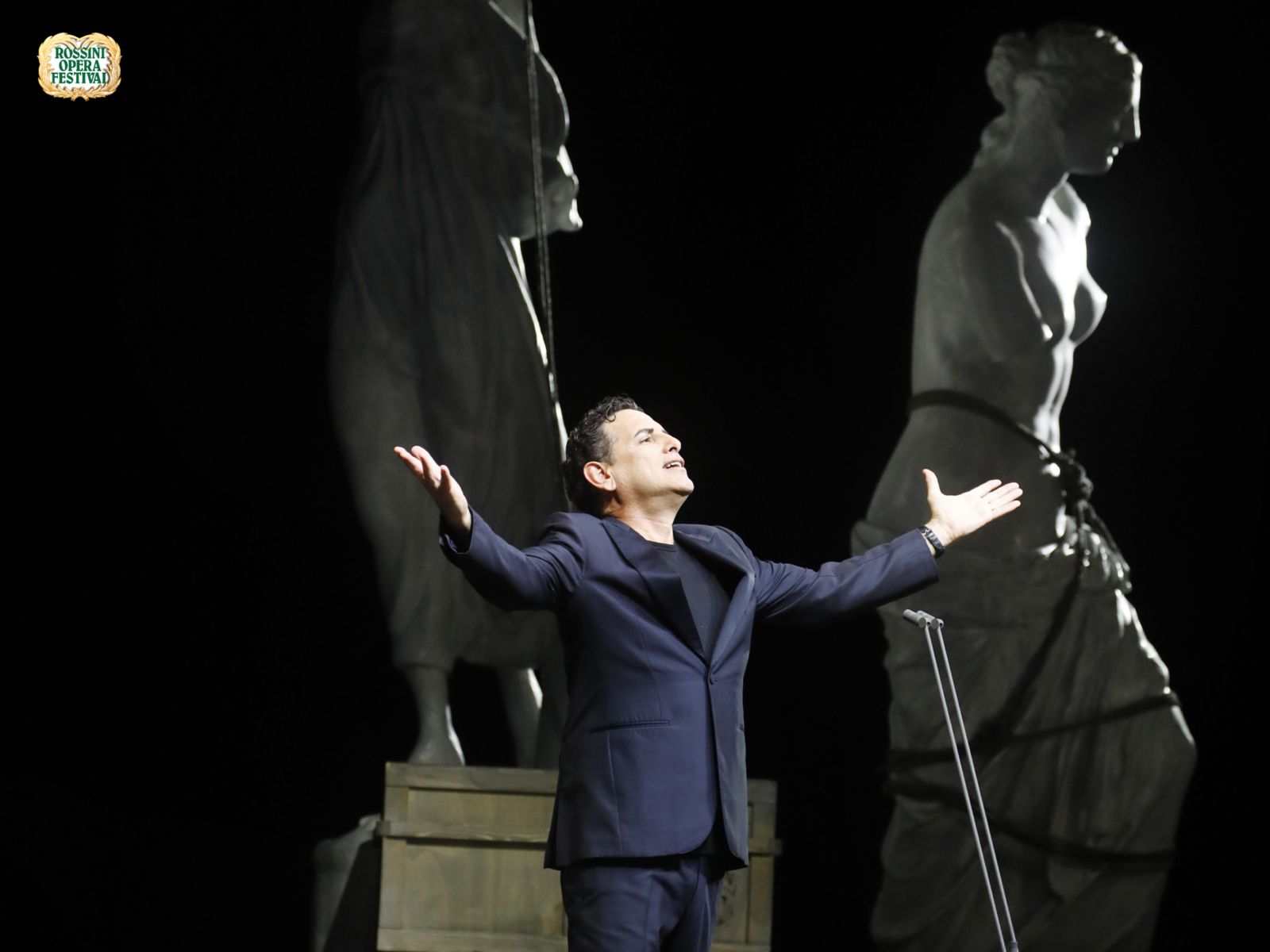
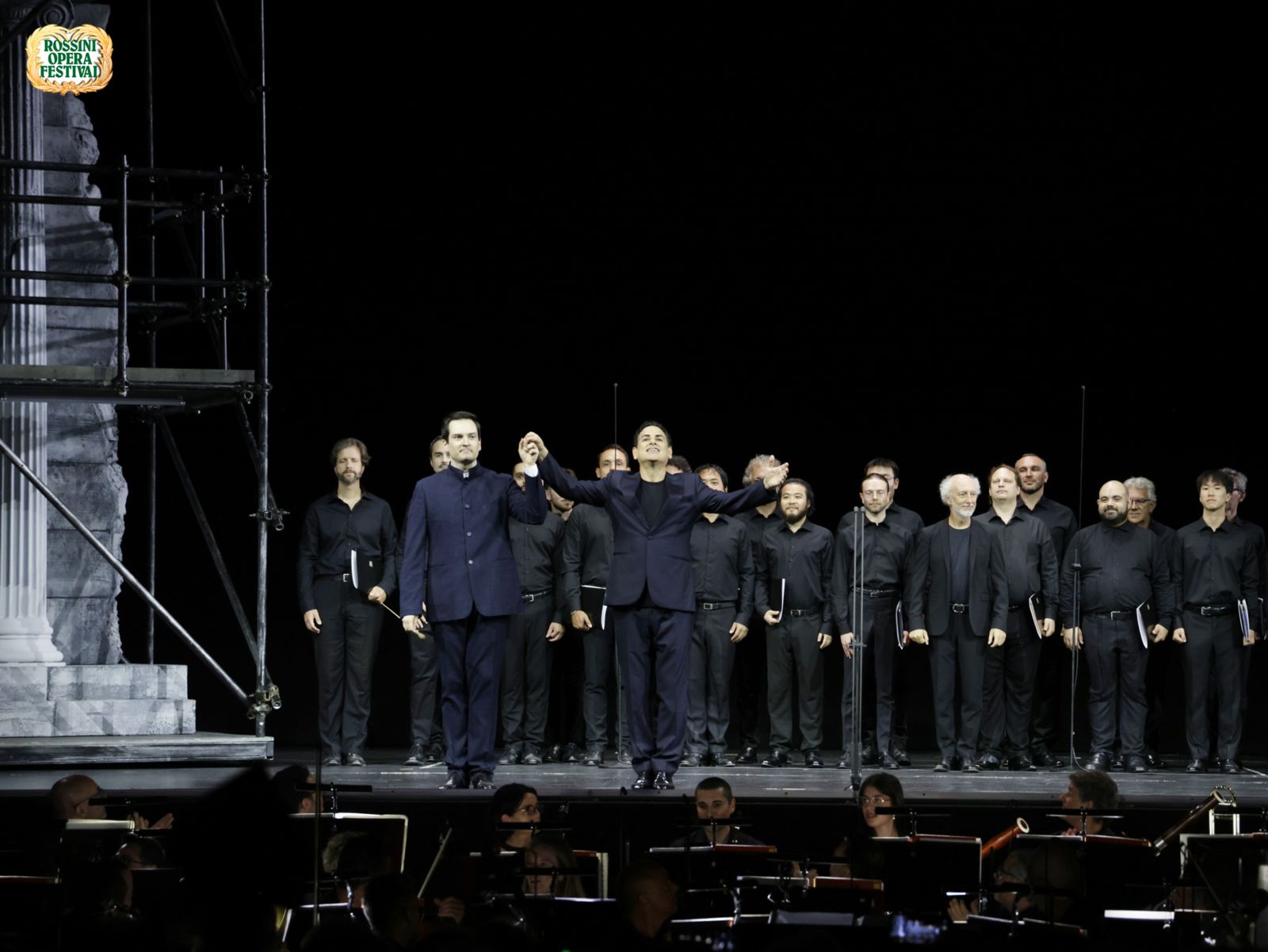
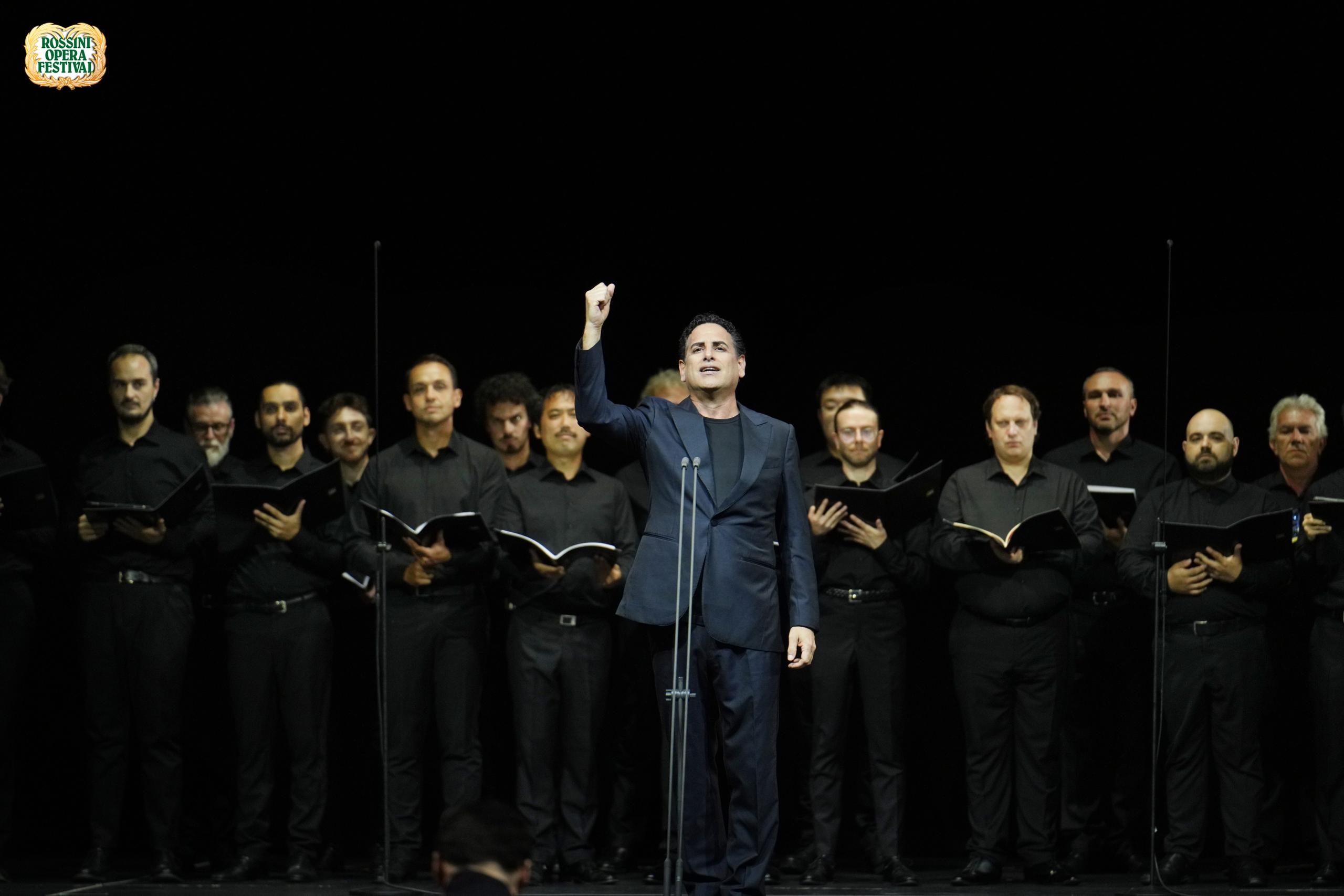
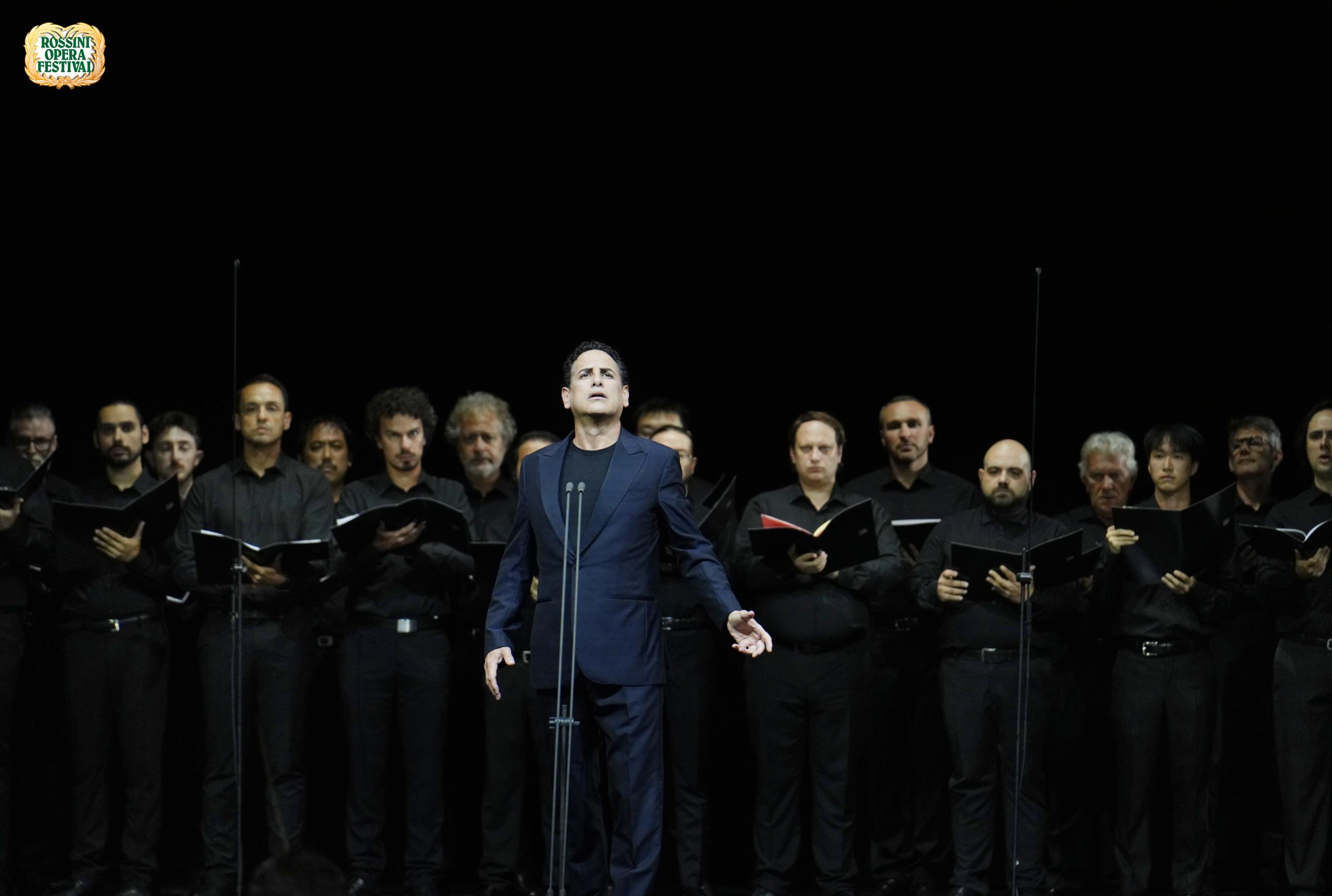

English: The long-awaited recital by Juan Diego Flórez, marking 30 years since his first appearance at the Rossini Opera Festival in 1996 — having already celebrated his first twenty years at the ROF in 2016 with the concert Flórez 20 — took place on 18 August at the Auditorium Scavolini. For the occasion, he was accompanied by the Orchestra del Teatro Comunale di Bologna, conducted by Iván López-Reynoso, together with the male voices of the Coro del Teatro Ventidio Basso. Since 2022, Flórez has also served as the Festival’s Artistic Director, further strengthening the special relationship he has maintained with an institution that has played a fundamental role in the development of his artistic career.
The programme, firmly rooted in the Italian bel canto tradition, opened with the well-known “Quell’alme pupilla” from Rossini’s La pietra del paragone, whose inclusion was particularly intriguing, as the tenor has never performed this opera on stage. Technical precision, an instinctive command of the craft, stylistic awareness, and an almost surgical attention to detail are among the qualities that define this singer. Flórez possesses a way of performing that can only be described as masterful: an overwhelming naturalness that makes seemingly effortless what in reality requires absolute command of both technique and style. It comes as little surprise, therefore, that he has become one of the great vocal phenomena of our time.
Next came the aria “Sì, ritrovarla io giuro” from Rossini’s La Cenerentola, one of the pieces that best suits Flórez’s vocal qualities and which has, deservedly, become one of his signature numbers. The tenor performed the role of Prince Ramiro at the ROF in two consecutive seasons, in 1998 and 2000, and subsequently took the production around the world, turning the aria into one of those moments audiences eagerly anticipate and immediately recognise. It is hardly surprising, therefore, that the Stage Door Society website records 59 performances of La Cenerentola on stage, not including the numerous recitals in which Flórez will have performed excerpts from the opera.
An undisputed specialist in Italian bel canto, Flórez gradually expanded his repertoire to embrace the French Romantic tradition as well. This evolution was clearly reflected in the programme with “Asile héréditaire!” from Rossini’s Guillaume Tell, a piece that highlights the tenor’s vocal and artistic development. Here, we encountered that clear, luminous simplicity, entirely free of artifice, which remains one of his greatest virtues.
The same elegance could be appreciated in “Ô souverain, ô juge, ô père” from Massenet’s Le Cid. The voice retains its luminosity and effortless upper register, while taking on a more lyrical and expressive dimension. Of a similar vocal nature was “Salut ! demeure chaste et pure” from Gounod’s Faust, where he once again demonstrated his extraordinary command of the French vocal line, the clarity of his diction, and a musicality that seems to arise with complete naturalness.
“Va pour Kleinzach!” and “Il était une fois à la cour d’Eisenach!” from Offenbach’s Les Contes d’Hoffmann, the celebrated tavern song recounting the adventures of Kleinzach, led the recital towards its final stages. Then came one of the most eagerly awaited moments of the evening: “Ah ! mes amis”, the famous aria of the nine high Cs from Donizetti’s La fille du régiment. Far from being merely a display of high notes, the aria revealed the energy and freshness that Flórez’s voice continues to possess after such a long and extraordinarily intense career.
With the audience completely enthralled and frenzied with enthusiasm, Flórez responded to the applause with no fewer than three encores: “Mattinata” by Leoncavallo; “L’alba separa dalla luce l’ombra” by Tosti; and, as a final encore, “La donna è mobile” from Verdi’s Rigoletto.
A concert to remember. Thirty years after his first appearance at the Festival, Juan Diego Flórez continues to demonstrate why his name is indelibly linked to the history of bel canto. The Flórez phenomenon remains very much alive, and the opportunity to hear him live is, quite simply, one that should not be missed.
Italian: L’atteso recital di Juan Diego Flórez, in occasione dei 30 anni trascorsi dalla sua prima partecipazione al Rossini Opera Festival, nel 1996 — nel 2016 aveva già celebrato i suoi primi vent’anni al ROF con il concerto Flórez 20 —, si è tenuto lo scorso 18 agosto all’Auditorium Scavolini. Per l’occasione è stato accompagnato dall’Orchestra del Teatro Comunale di Bologna, diretta da Iván López-Reynoso, insieme alle voci maschili del Coro del Teatro Ventidio Basso. Dal 2022, Flórez ricopre inoltre l’incarico di direttore artistico del Festival, consolidando ulteriormente lo speciale rapporto che lo lega a un’istituzione che ha avuto un ruolo fondamentale nello sviluppo della sua carriera artistica.
Il repertorio proposto, saldamente radicato nella tradizione del bel canto italiano, si è aperto con la celebre “Quell’alme pupilla” da La pietra del paragone di Rossini, la cui inclusione risultava particolarmente interessante, dal momento che il tenore non ha mai interpretato quest’opera sulle scene. La pulizia tecnica, il mestiere, la conoscenza dello stile e un’attenzione al dettaglio quasi chirurgica sono alcune delle caratteristiche che definiscono questo cantante. Flórez possiede un modo di fare che potremmo definire magistrale: una naturalezza travolgente che fa apparire semplice ciò che, in realtà, richiede un’assoluta padronanza della tecnica e dello stile. Non sorprende, dunque, che sia diventato uno dei grandi fenomeni vocali del nostro tempo.
È seguita l’aria “Sì, ritrovarla io giuro” da La Cenerentola di Rossini, una delle pagine che meglio si adattano alle qualità vocali di Flórez e che è diventata, a pieno titolo, uno dei suoi cavalli di battaglia. Il tenore ha interpretato il ruolo del principe Ramiro al ROF in due stagioni consecutive, nel 1998 e nel 2000, portando successivamente la produzione in tournée in mezzo mondo e trasformando l’aria in uno di quei momenti che il pubblico attende e riconosce immediatamente. Non sorprende quindi che il sito Stage Door Society registri 59 recite de La Cenerentola in teatro, senza contare i numerosi recital nei quali Flórez avrà interpretato brani dell’opera.
Specialista indiscusso del bel canto italiano, Flórez ha progressivamente ampliato il proprio repertorio fino ad abbracciare anche la tradizione romantica francese. Questa evoluzione è emersa chiaramente nel programma con “Asile héréditaire!” dal Guillaume Tell di Rossini, una pagina che mette in luce l’evoluzione vocale e artistica del tenore. Qui ritroviamo quella semplicità chiara, luminosa e priva di qualsiasi artificio che continua a rappresentare una delle sue principali virtù.
La stessa eleganza si è potuta apprezzare in “Ô souverain, ô juge, ô père” dal Le Cid di Massenet. La voce conserva la propria luminosità e la facilità nel registro acuto, assumendo al contempo una dimensione più lirica ed espressiva. Della stessa natura vocale è stata “Salut ! demeure chaste et pure” dal Faust di Gounod, dove ha nuovamente dimostrato la sua straordinaria padronanza della linea vocale francese, la chiarezza della dizione e una musicalità che sembra scaturire con assoluta naturalezza.
“Va pour Kleinzach!” e “Il était une fois à la cour d’Eisenach!” da Les Contes d’Hoffmann di Offenbach, la celebre canzone da taverna dedicata alle avventure di Kleinzach, hanno condotto il recital verso la sua parte conclusiva. Ed è arrivato allora uno dei momenti più attesi della serata: “Ah ! mes amis”, la celebre aria dei nove do acuti da La fille du régiment di Donizetti. Lungi dall’essere una semplice esibizione di acuti, l’aria ha messo in evidenza l’energia e la freschezza che la voce di Flórez continua a conservare dopo una carriera così lunga e straordinariamente intensa.
Con un pubblico completamente conquistato e in preda all’entusiasmo, Flórez ha risposto agli applausi con ben tre bis: “Mattinata” di Leoncavallo; “L’alba separa dalla luce l’ombra” di Tosti; e, come ultimo bis, “La donna è mobile” dal Rigoletto di Verdi.
Un concerto da ricordare. A trent’anni dalla sua prima apparizione al Festival, Juan Diego Flórez continua a dimostrare perché il suo nome sia indissolubilmente legato alla storia del bel canto. Il fenomeno Flórez è ancora pienamente vivo e l’opportunità di ascoltarlo dal vivo è, semplicemente, un appuntamento da non perdere.
Spanish: El esperado recital de Juan Diego Flórez, con motivo de los 30 años transcurridos desde su primera participación en el Rossini Opera Festival, en 1996 —en 2016 ya había celebrado sus primeros veinte años en el ROF con el concierto Flórez 20—, tuvo lugar el pasado 18 de agosto en el Auditorio Scavolini. Para la ocasión estuvo acompañado por la Orchestra del Teatro Comunale di Bologna, bajo la dirección de Iván López-Reynoso, junto con las voces masculinas del Coro del Teatro Ventidio Basso. Desde 2022, Flórez asume además la dirección artística del Festival, consolidando así, aún más, la especial relación que mantiene con una institución que ha sido fundamental en el desarrollo de su trayectoria artística.
El repertorio presentado, firmemente arraigado en la tradición del bel canto italiano, se inició con la conocida “Quell’alme pupilla”, de La pietra del paragone, de Rossini, cuya inclusión resultaba especialmente interesante, puesto que el tenor nunca ha interpretado esta ópera sobre el escenario. La pulcritud técnica, el saber hacer, el conocimiento estilístico y una atención al detalle casi quirúrgica son algunas de las características que definen a este cantante. Flórez posee una manera de hacer que podríamos calificar de magistral: una naturalidad aplastante que hace parecer sencillo aquello que, en realidad, exige un dominio absoluto de la técnica y del estilo. Nada sorprende, por tanto, que haya terminado convirtiéndose en uno de los grandes fenómenos vocales de nuestro tiempo.
A continuación llegó el aria de La Cenerentola de Rossini, “Sì, ritrovarla io giuro”, una de las páginas que mejor encajan con las cualidades vocales de Flórez y que se ha convertido, por derecho propio, en una de sus grandes cartas de presentación. El tenor interpretó el papel del príncipe Ramiro en el ROF durante dos temporadas consecutivas, en 1998 y 2000, y posteriormente llevó la producción por medio mundo, convirtiendo el aria en uno de esos momentos que el público espera y reconoce inmediatamente. No resulta extraño, por tanto, que la web Stage Door Society registre 59 funciones de La Cenerentola en teatro, sin contar los numerosos recitales en los que Flórez habrá interpretado fragmentos de la ópera.
Especialista indiscutible en el bel canto italiano, Flórez fue ampliando progresivamente su repertorio hasta adentrarse también en la tradición romántica francesa. Esta evolución apareció claramente reflejada en el programa con “Asile héréditaire!” de Guillaume Tell de Rossini, una página que pone de manifiesto la evolución vocal y artística del tenor. Allí encontramos esa sencillez clara, luminosa y desprovista de cualquier artificio que continúa siendo una de sus principales virtudes.
La misma elegancia pudo apreciarse en “Ô souverain, ô juge, ô père”, de Le Cid de Massenet. La voz conserva su luminosidad y su facilidad en el registro agudo, pero adquiere aquí una dimensión más lírica y expresiva. De similar naturaleza vocal fue “Salut ! demeure chaste et pure”, de Faust de Gounod, donde volvió a demostrar su extraordinario dominio de la línea francesa, la claridad de la dicción y una musicalidad que parece surgir de manera absolutamente natural.
“Va pour Kleinzach!” y “Il était une fois à la cour d’Eisenach!”, de Les Contes d’Hoffmann de Offenbach, la célebre canción de taberna dedicada a las aventuras de Kleinzach, condujo el recital hacia su recta final. Y entonces llegó uno de los momentos más esperados de la noche: “Ah ! mes amis”, el célebre aria de los nueve do de pecho de La fille du régiment de Donizetti. Lejos de ser únicamente una exhibición de agudos, el aria puso de manifiesto la energía y frescura que conserva su instrumento después de una trayectoria tan larga y extraordinariamente intensa.
Con un público completamente entregado y frenético, Flórez agradeció los aplausos con nada más y nada menos que tres bises: “Mattinata”, de Leoncavallo; “L’alba separa dalla luce l’ombra”, de Tosti; y, como broche final, “La donna è mobile”, de Rigoletto de Verdi.
Un concierto para el recuerdo. Treinta años después de su primera aparición en el Festival, Juan Diego Flórez continúa demostrando por qué su nombre está indisolublemente ligado a la historia del bel canto. El fenómeno Flórez sigue vigente, y una oportunidad para escucharlo en directo sigue siendo, sencillamente, una cita que no conviene perderse.
Photo credits: Amati Bacciardi | Rossini Opera Festival