The music of Giulio Cesare in Egitto enveloped the Palau de les Arts Reina Sofía like a starry veil on February 28. This work, presented under the artistic direction of Jesús Iglesias, is considered one of George Frideric Handel’s masterpieces and one of the most celebrated opera seria of the Baroque period. Premiered in 1724 at London’s King’s Theatre, its libretto, written by Nicola Francesco Haym, combines historical events with dramatic and romantic elements characteristic of eighteenth-century opera seria.
Handel was the principal architect of the Italian opera seasons in London: he composed the scores, adapted libretti, and prepared the music for the singers, conducting the performances from the harpsichord, as was customary at the time. For several years he worked with the Royal Academy of Music, producing Italian operas at the King’s Theatre, where he also assumed the responsibilities of a theatrical impresario. Born in 1685 in Halle, Germany, he moved to England in 1712 and settled there permanently due to the success of his music in the court and London theaters. He was naturalized as a British citizen on January 22, 1727, the same year he composed the Coronation Anthems for the coronation of King George II, including the famous Zadok the Priest. Later, as Italian opera began to lose popularity in England, Handel turned his focus to English oratorios, such as the renowned Messiah, achieving enormous success.
The musical direction of Mark Minkowski was outstanding. His profound knowledge of the repertoire was evident in the clarity of the orchestral textures, the pianissimos that created an expectant silence in the hall, and the elegant handling of Handel’s music, leaving the audience in a dreamlike state. The Orquestra de la Comunitat Valenciana, adapted to Baroque instrumentation, shone with an interpretation of formidable quality.
The set design by Frank Philipp Schlößmann combined simple yet colorful visuals with video projections by Nicolas Hurtevent, creating a harmonious contrast with the costumes designed by Christian Lacroix, whose color choices reinforced the dramatic intentions of the characters. The production, under the stage direction of Vincent Boussard, emphasized the interaction between singers and the pacing of the work, essential given its length. Also noteworthy were the contributions of the technical team: Robert Schwaighofer, responsible for costumes, and lighting designers Andreas Grüter and Svenja Gottsmann, who used light and shadow to heighten the dramatic tension and underscore the emotional atmosphere of each scene.
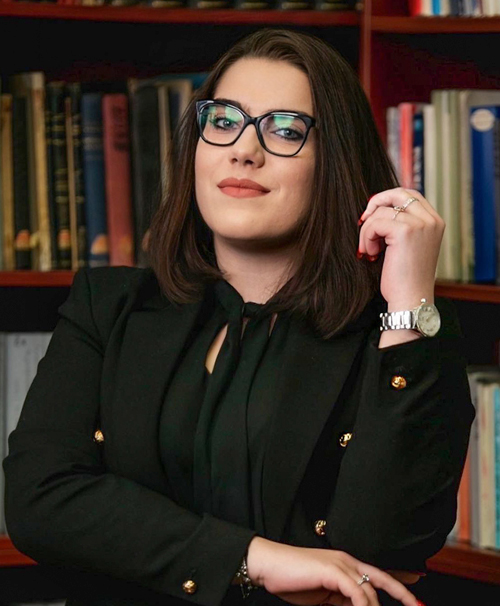
Vocally, Valencian soprano Marina Monzó, making her Baroque debut, captivated the audience with her technical skill and interpretive mastery. Her performances of “Se pietà di me non senti”, with impeccable legato, and “Da tempeste il legno infranto”, for its dazzling coloratura, stood out. With this performance, Monzó establishes herself as one of the most cherished Valencian sopranos, leaving audiences eager for her return to the Palau de les Arts in demanding roles.
American countertenor Aryeh Nussbaum took on the role of Cesare with mastery, debuting at Les Arts. Already experienced in this part, he impressed with the expressivity of his upper register and the interpretive clarity he brought to the character. With confidence and control, he navigated the coloratura with precision and expressive power, presenting a Cesare imbued with clarity, authority, and presence, fully embodying the leader demanded by the role.
Sara Mingardo (Cornelia) and Arianna Vendittelli (Sesto) delivered mature performances, masterfully balancing mother and son. Cameron Shahbazi (Tolomeo) portrayed a young, proud king, commanding his monarchy. Vocally, his sensitivity projected across the stage, conveying the character’s most intimate and vulnerable facets. Jean-Philippe McClish (Achilla), Bryan Sala (Curio), and Lora Grigorieva (Nireno) stood out for their vocal technique and expressive acting, completing a high-caliber cast that made this production of Giulio Cesare in Egitto shine.