
A complete sell-out for weeks marked the tremendous success of the final production of Valencia’s Les Arts 2025–2026 season. Giacomo Puccini’s celebrated opera was performed at the Valencian opera house on 11 June, fittingly during the year that marks the centenary of its premiere at Milan’s Teatro alla Scala under the baton of Arturo Toscanini.
Puccini’s fascination with exotic subjects once again led him to compose an opera inspired by the story of a princess who will only agree to marry the man capable of defeating her intellectually. The use of bitonality, the pentatonic scale, and traditional Chinese melodies such as Mòlìhuā (Jasmine Flower) transforms the Luccan composer’s final opera into a journey through a musical fable far removed from the verismo style of earlier works such as Tosca and La Bohème.
The Italian libretto, written by Giuseppe Adami and Renato Simoni, is based on Carlo Gozzi’s Turandot (1762), which itself derives from stories collected by the French orientalist François Pétis de la Croix in Les Mille et Un Jours (The Thousand and One Days), a collection that included a version of the Turandot tale. Pétis de la Croix claimed to have drawn upon a compilation of stories attributed to a dervish from Isfahan named Mokhlis. However, these manuscripts have never been conclusively identified.
The earliest known antecedent of the story is likely to be Haft Peykar (The Seven Beauties), the epic poem composed around 1197 by Nizami Ganjavi. This work is of particular importance because, according to numerous scholars, it contains the oldest surviving version of the narrative that would eventually evolve into Turandot.
The poem recounts the story of the Sasanian king Bahram V, who maintains relationships with seven princesses from different regions of the known world. Each princess inhabits a pavilion of a different colour. Among them is a Russian princess who systematically rejects her suitors and subjects them to tests of wit and riddles. Only the man capable of demonstrating intelligence, perseverance, and courage may aspire to win her hand.
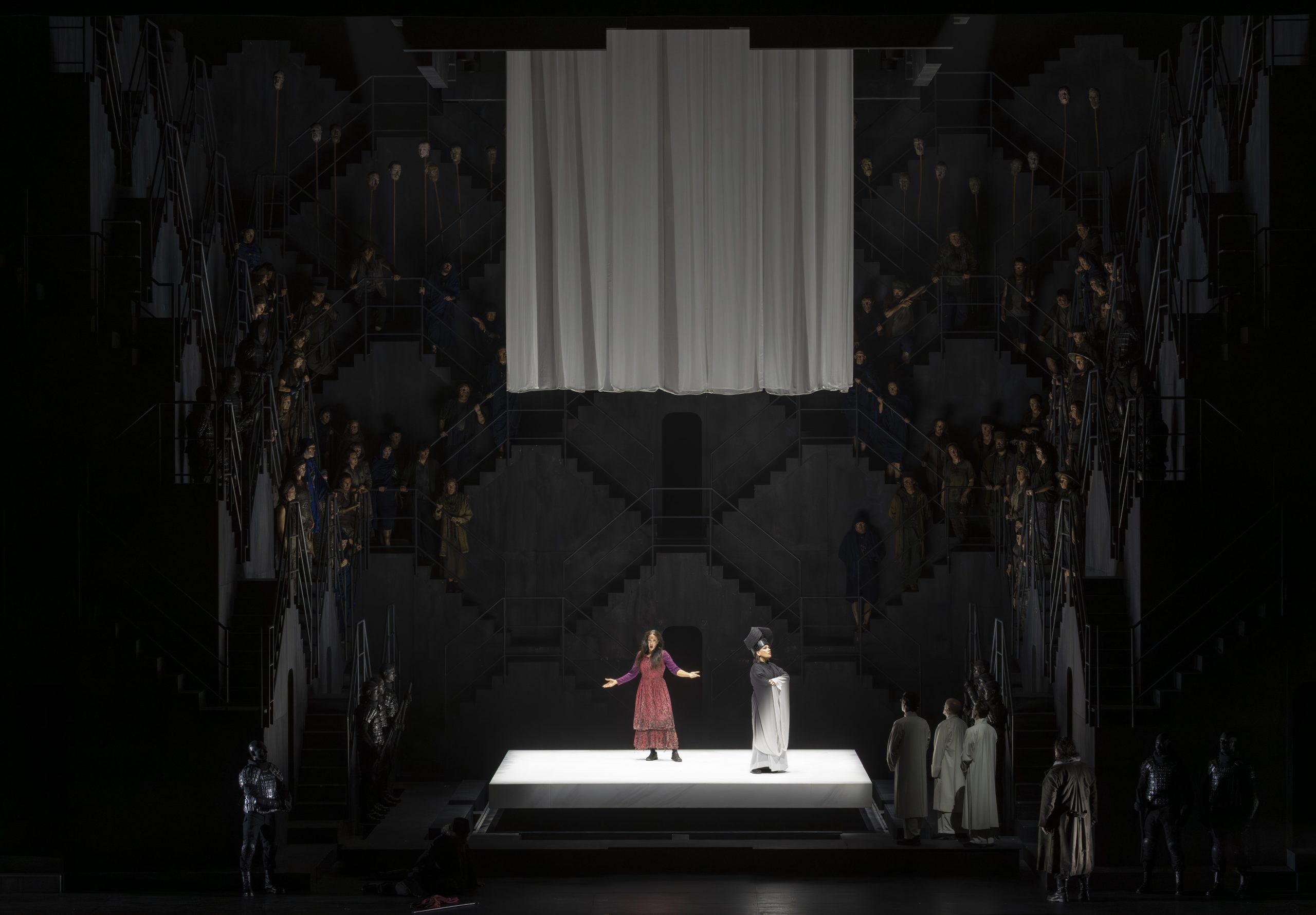
Two operatic legends took on the leading roles. Turandot, a role written for dramatic soprano, was portrayed with commanding authority by Ekaterina Semenchuk. The singer approaches the character from the perspective of a mature and distinguished career, bringing a dark and powerful vocal colour that enriches the princess’s characterization.
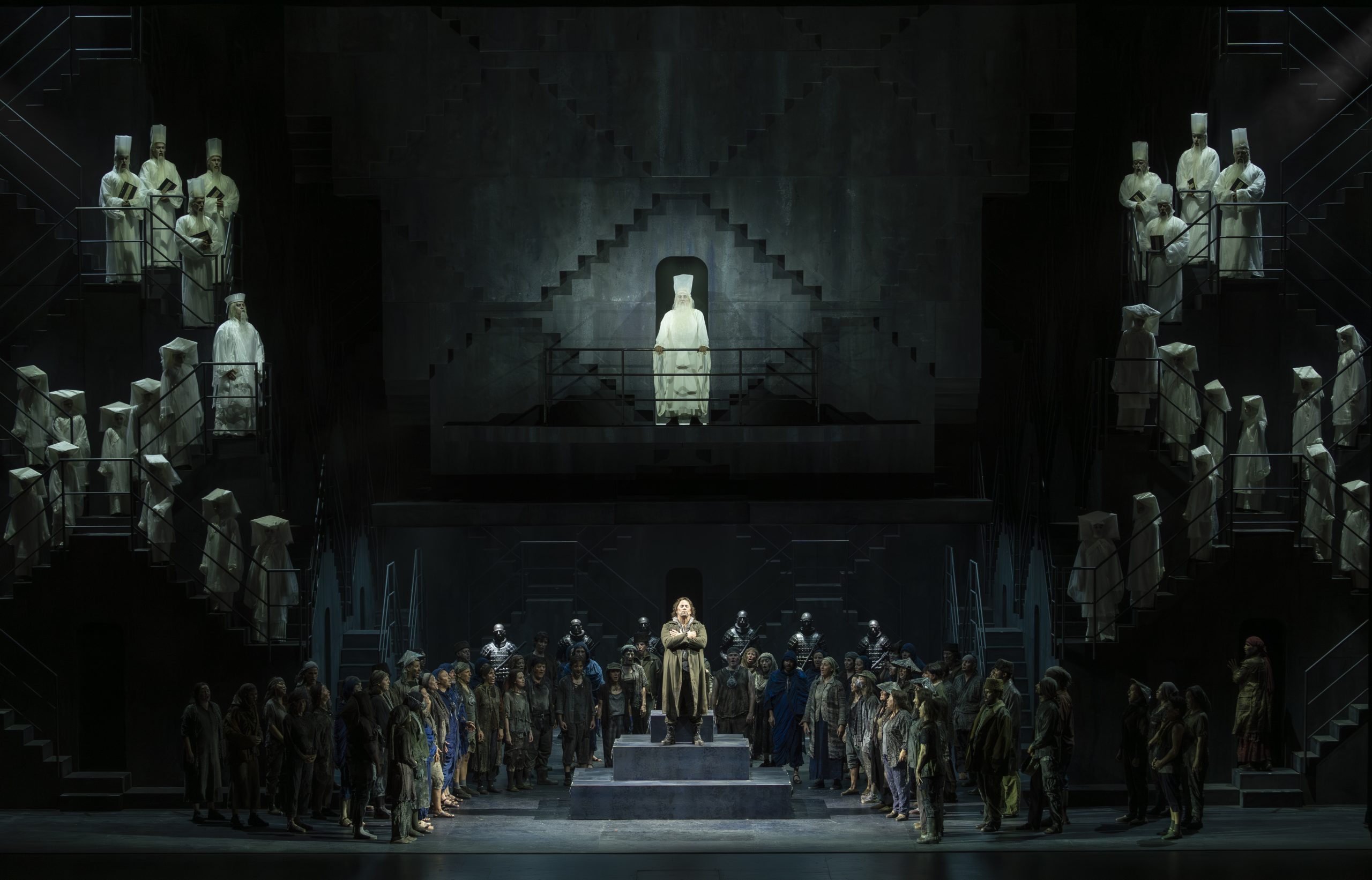
A similar case can be found in Gregory Kunde. Recalling his beginnings as a bel canto tenor, the evolution of his voice and the exceptional quality of his instrument have enabled him to build a remarkable international career. The experienced singer impressed with his complete mastery of the role and a particular sensitivity in shaping the dramatic profile of Calaf.
Though not one of the central protagonists, Liang Li shone as Timur. Renowned for portraying figures of authority and profound vocal depth in Wagner, Verdi, and Puccini, the bass possesses a dark, expansive timbre ideally suited to such characters. This was evident in a vocal projection that filled the auditorium and a stage presence marked by dignity and nobility.
Liù was sung by the young soprano Carolina López Moreno. Endowed with a voice of remarkable projection and a warm, rounded, and homogeneous timbre, she stood out particularly for the emotional intensity of her portrayal and the expressiveness of her performance.
The trio inspired by the characters of the commedia dell’arte was formed by Jan Antem (Ping), whose beautiful timbre displayed a wealth of colour and nuance, combined with notable musicality; Pablo García-López (Pang), a former member of Les Arts’ Centre de Perfeccionament, who distinguished himself through vocal mastery and excellent diction; and Mikeldi Atxalandabaso (Pong), who contributed vocal stability and a solid stage presence.
Despite the brevity of their appearances, no less important to the dramatic development of the work, special mention should also be made of tenor Josep Fadó as Altoum and Centre de Perfeccionament alumnus Agshin Khudaverdiyev as the Mandarin.
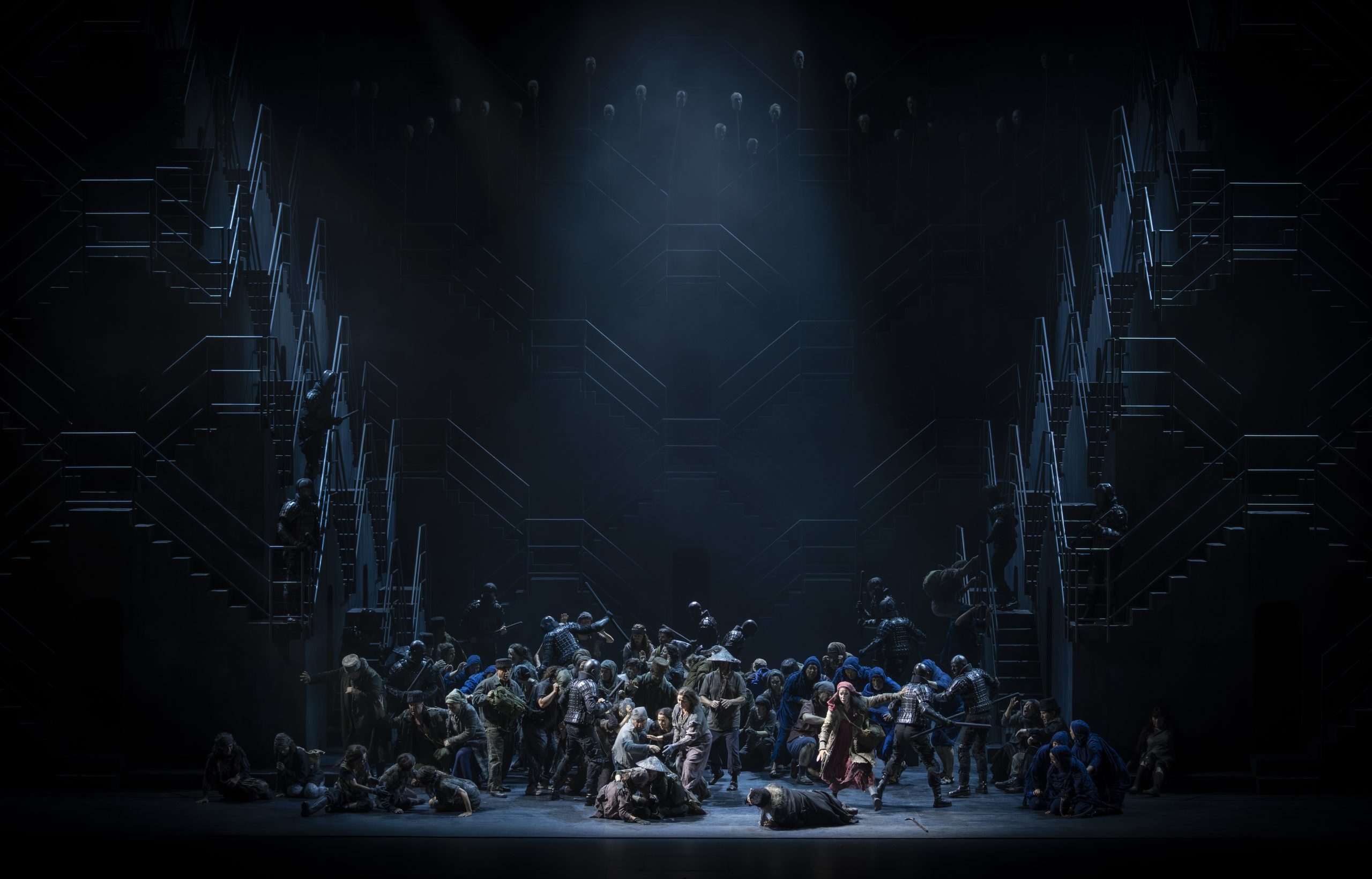
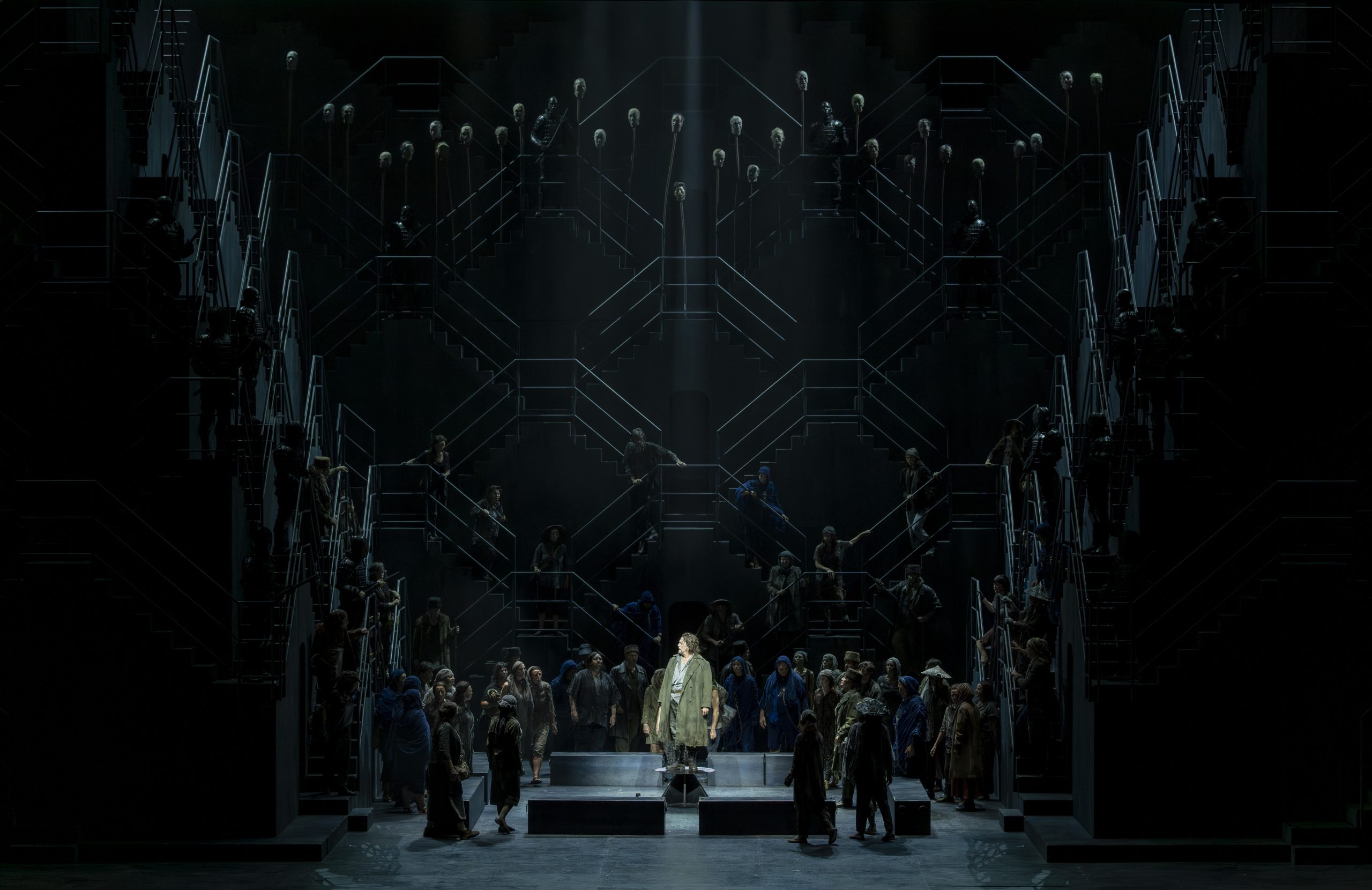
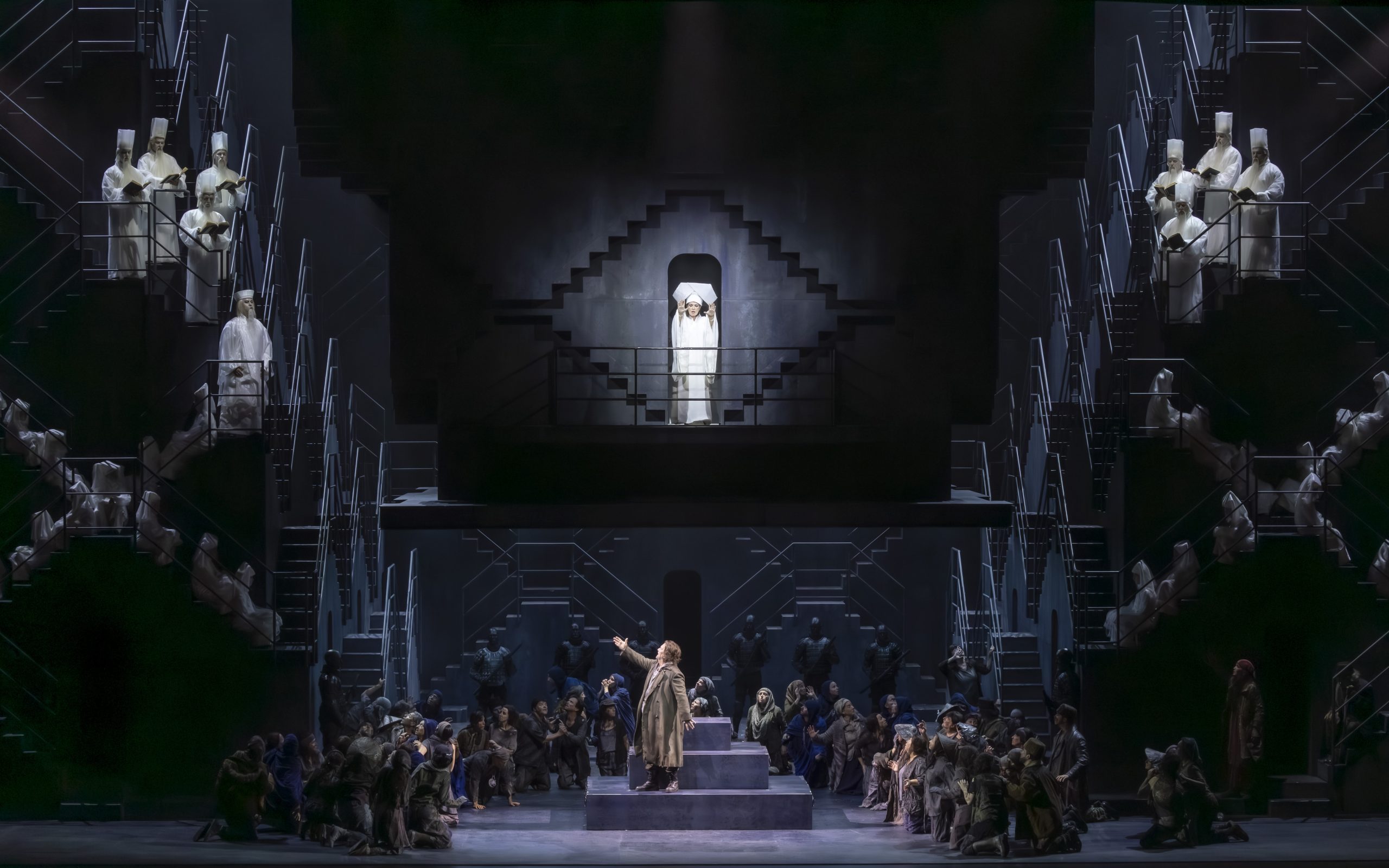
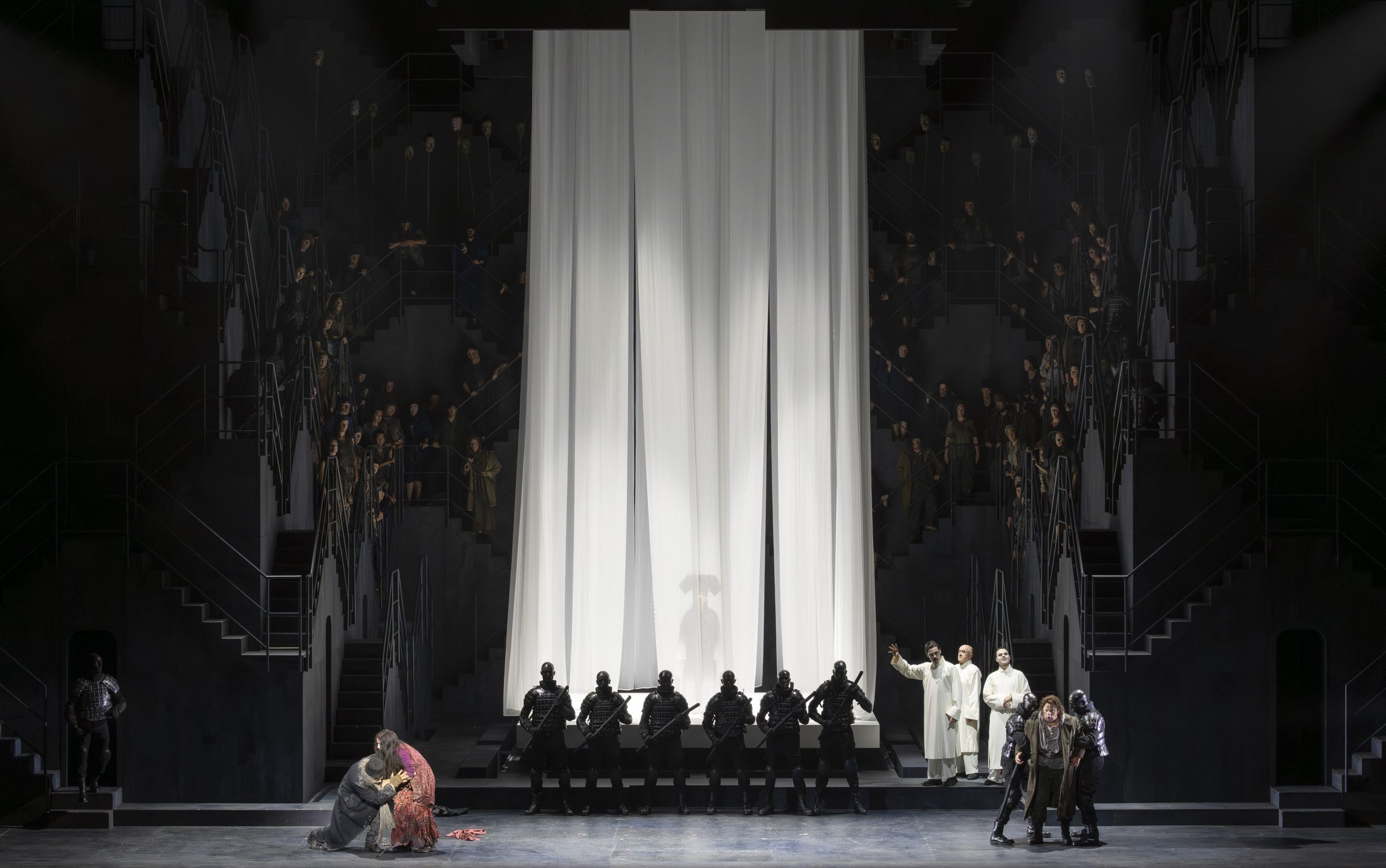
This production, originating from Tokyo’s New National Theatre and Tokyo Bunka Kaikan, was staged by the acclaimed director Àlex Ollé. Setting the action in the suburbs of a timeless China, Ollé highlights the work’s social critique, Calaf’s ambition to attain the power embodied by Turandot, and the heroine’s inherited trauma stemming from the rape and murder of her ancestress Lo-u-Ling.
The technical team also delivered extraordinary work. Set designer Alfons Flores, costume designer Lluc Castells, and lighting designer Urs Schönebaum combined precision and visual sensitivity to create an atmosphere of striking visual beauty.
The true star of the evening, however, was the Orchestra of the Comunitat Valenciana, which performed magnificently under the direction of Sir Mark Elder, the company’s Music Director. His experience, stylistic insight, and ability to shape the musical narrative elevated the performance to a level of genuine excellence. The orchestra’s power, clarity, and tonal richness were as impressive as they were moving.
The Cor de la Generalitat Valenciana likewise delivered a performance of considerable artistic merit, contributing decisively to the dramatic force of a score that continues to captivate audiences one hundred years after its premiere.
Spanish Version: Un sold out absoluto durante semanas ha marcado el gran éxito de la última producción de la temporada 2025-2026 de Les Arts de Valencia. La reconocida ópera de Giacomo Puccini sonó en el coliseo valenciano el pasado 11 de junio, precisamente en el año en que se cumple el centenario de su estreno en el Teatro alla Scala de Milán, bajo la dirección de Arturo Toscanini.
La fascinación del maestro Puccini por las temáticas exóticas lo llevó una vez más a componer una ópera inspirada en la historia de una princesa que solo aceptará casarse con quien logre vencerla intelectualmente. El uso de la bitonalidad, la escala pentatónica y melodías tradicionales chinas como Mòlìhuā (La flor de jazmín) convierten la última ópera del compositor de Lucca en un viaje hacia una fábula musical muy alejada del estilo verista de obras anteriores como Tosca o La Bohème.
El libreto en italiano, escrito por Giuseppe Adami y Renato Simoni, está basado en la obra Turandot (1762) de Carlo Gozzi, que tiene a su vez su origen en los relatos recopilados por el orientalista francés François Pétis de la Croix en Les Mille et Un Jours (Los mil y un días), colección en la que apareció una versión de la historia de Turandot. Pétis de la Croix afirmó haberse basado en una recopilación de cuentos atribuida a un derviche de Isfahán llamado Mokhlis. Sin embargo, dichos manuscritos nunca han podido ser identificados con certeza.
Los antecedentes más remotos conocidos de la historia se encuentran probablemente en Haft Peykar (Las siete bellezas), el poema épico compuesto hacia 1197 por Nizami Ganjavi. Esta obra resulta fundamental porque contiene, según numerosos estudiosos, el antecedente más antiguo conservado del relato que acabaría convirtiéndose en Turandot.
El poema narra la historia del rey sasánida Bahram V, quien mantiene relación con siete princesas procedentes de distintas regiones del mundo conocido. Cada una habita un pabellón de un color diferente. Entre ellas figura una princesa rusa que rechaza sistemáticamente a sus pretendientes y los somete a pruebas de ingenio y acertijos. Solo aquel capaz de demostrar inteligencia, perseverancia y valor podrá aspirar a obtener su mano.
Dos leyendas de la ópera interpretaron los roles principales. Turandot, papel escrito para soprano dramática, fue encarnada con gran autoridad por Ekaterina Semenchuk. La cantante, afronta el personaje desde la madurez de una amplia trayectoria artística, aportando un color oscuro y poderoso que enriquece la caracterización vocal de la princesa.
Una situación similar se produce con Gregory Kunde. Recordando sus inicios como tenor belcantista, la evolución de su voz y la extraordinaria calidad de su instrumento le han permitido construir una amplia carrera. El experimentado cantante destacó por su absoluto conocimiento del rol, así como por una especial sensibilidad en la construcción dramática del personaje de Calaf.
Sin ser uno de los protagonistas centrales, Liang Li brilló en Timur. El bajo, reconocido por interpretar personajes de gran autoridad y profundidad vocal en Wagner, Verdi y Puccini, posee un timbre oscuro y amplio, especialmente adecuado para este tipo de figuras. Así lo demostró con una proyección sonora que inundó el patio de butacas y una presencia escénica de gran nobleza.
Liù, por su parte, fue la joven soprano Carolina López Moreno. Dotada de un instrumento de notable proyección y un timbre redondo y homogéneo, destacó especialmente por la intensidad emocional de su personaje y su expresividad.
El trío inspirado en los personajes de la commedia dell’arte estuvo integrado por Jan Antem (Ping), poseedor de un bello timbre, rico en matices y colores, además de una notable musicalidad; Pablo García-López (Pang), antiguo alumno del Centre de Perfeccionament de Les Arts, que destacó por su dominio vocal y la excelente articulación del texto; y Mikeldi Atxalandabaso (Pong), que aportó una notable estabilidad vocal y una sólida presencia escénica.
A pesar de la brevedad de sus intervenciones, no menos relevantes para el desarrollo dramático, merecen también una mención el tenor Josep Fadó como Altoum y el alumno del Centre de Perfeccionament, el barítono Agshin Khudaverdiyev, en el papel del Mandarín.
Esta producción, procedente del New National Theatre de Tokio y del Tokyo Bunka Kaikan, ha sido dirigida escénicamente por el reconocido director Àlex Ollé. Inspirando la acción en los suburbios de una China atemporal, Ollé pone de relieve la crítica social, la ambición de Calaf por alcanzar el poder representado por Turandot y el trauma heredado de la protagonista a raíz de la violación y asesinato de su antepasada Lo-u-Ling.
Sin duda, el equipo técnico desempeñó una labor extraordinaria. Alfons Flores, responsable de la escenografía; Lluc Castells, diseñador de vestuario; y Urs Schönebaum, encargado de la iluminación, que construyó con precisión y sensibilidad visual una atmósfera de gran belleza plástica.
La gran triunfadora de la noche fue, sin embargo, la Orquesta de la Comunitat Valenciana, que sonó de manera excepcional bajo la dirección de Sir Mark Elder, director musical de la casa. Su experiencia, conocimiento estilístico y capacidad para modelar el discurso musical permitieron alcanzar cotas de auténtica excelencia. La potencia, la claridad de la dirección y la calidad sonora de la orquesta resultaron tan impresionantes como emocionantes.
A ello se sumó el Cor de la Generalitat Valenciana, que realizó una labor de notable nivel artístico y contribuyó decisivamente a la fuerza dramática de una partitura que sigue cautivando al público cien años después de su estreno.