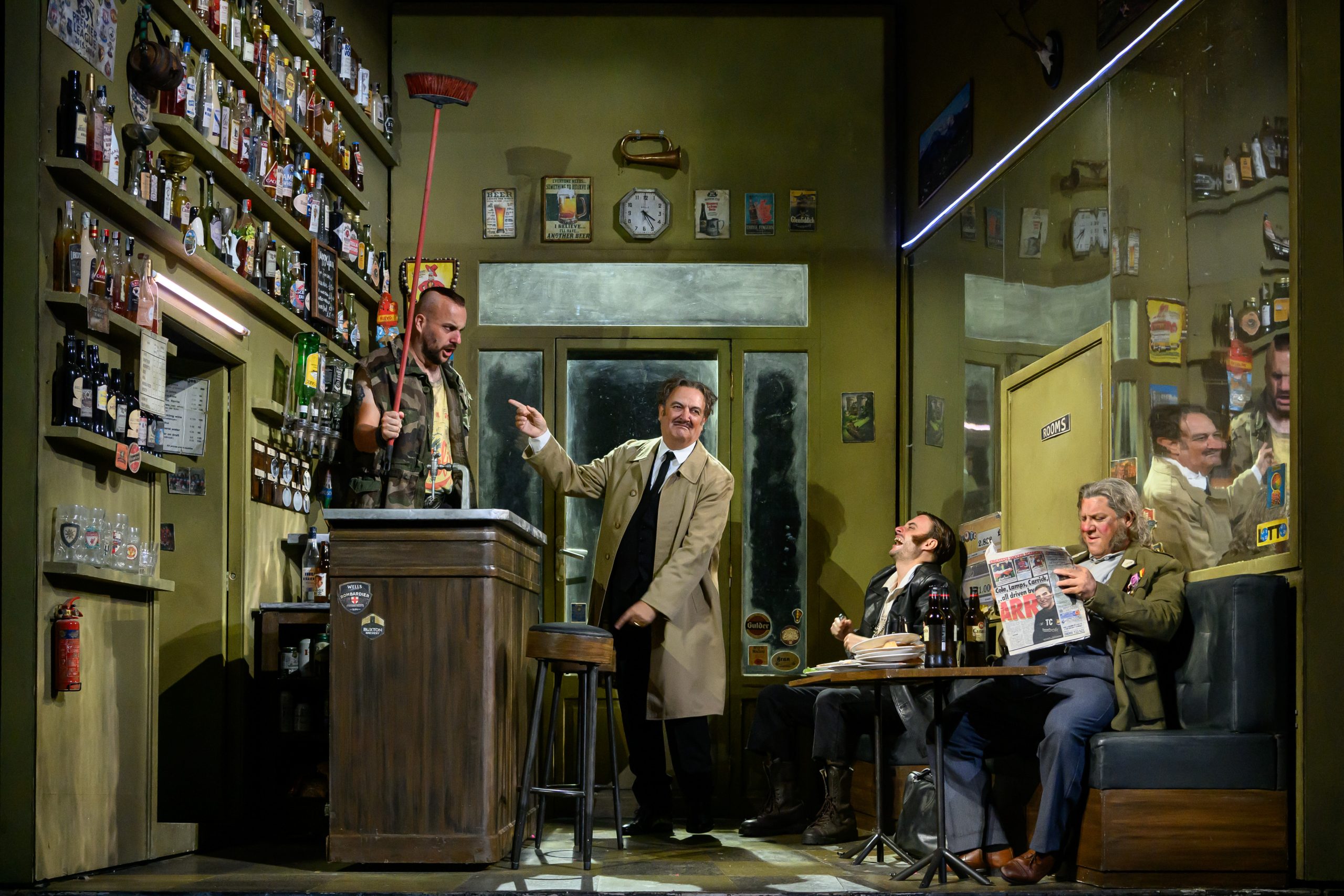

“There is only one way to end a career better than with Otello: with the triumph of Falstaff.” With these words, Arrigo Boito, librettist of Falstaff, wrote to Giuseppe Verdi, convinced that only a great comedy could surpass the success of Shakespearean tragedy. And indeed, it was with the triumph of Falstaff that the Gran Teatre del Liceu brought its operatic season to a close on 9 July, while simultaneously marking the end of an era: Josep Pons’s tenure as the theatre’s Music Director.
Verdi believed that Aida would be his farewell to opera. Between the premiere of Aida (1871) and the beginning of the composition of Otello (1887), later crowned by Falstaff (1893), sixteen years elapsed—a period often described by historians as a prolonged creative silence. Yet rather than reflecting a lack of inspiration, those years stemmed from Verdi’s determination to preserve the extraordinary artistic standards he had already achieved. After an unparalleled career, he was willing to return to the stage only for a project of exceptional quality.
Verdi was not the only composer to experience an extended creative hiatus. Rossini abandoned opera composition for decades, while Sibelius famously left his Eighth Symphony unfinished after years of silence. Verdi’s case, however, was markedly different. His apparent inactivity proved intellectually fertile. Like Wagner during the creation of The Ring of the Nibelung, Verdi never ceased to cultivate his artistic vision.
Financial independence—he was by then immensely wealthy and internationally celebrated—allowed him to devote himself to managing his estate at Sant’Agata and to several philanthropic projects, foremost among them the Casa di Riposo per Musicisti, perhaps the achievement that brought him the greatest personal satisfaction. During these years he revised earlier works, immersed himself in Shakespeare, closely followed developments in European opera, and maintained an intense correspondence with Arrigo Boito and Giulio Ricordi.
It was Boito who, following the success of Otello, finally persuaded Verdi to return with a libretto inspired by one of Shakespeare’s most compelling creations: Sir John Falstaff. Although never the protagonist of a Shakespeare play, the character features memorably in both parts of Henry IV and in The Merry Wives of Windsor. Drawing on these sources, Boito fashioned a libretto of remarkable dramatic intelligence that rekindled Verdi’s desire to write for the stage once more. The result was a comedy of extraordinary maturity that would become the composer’s luminous artistic testament.
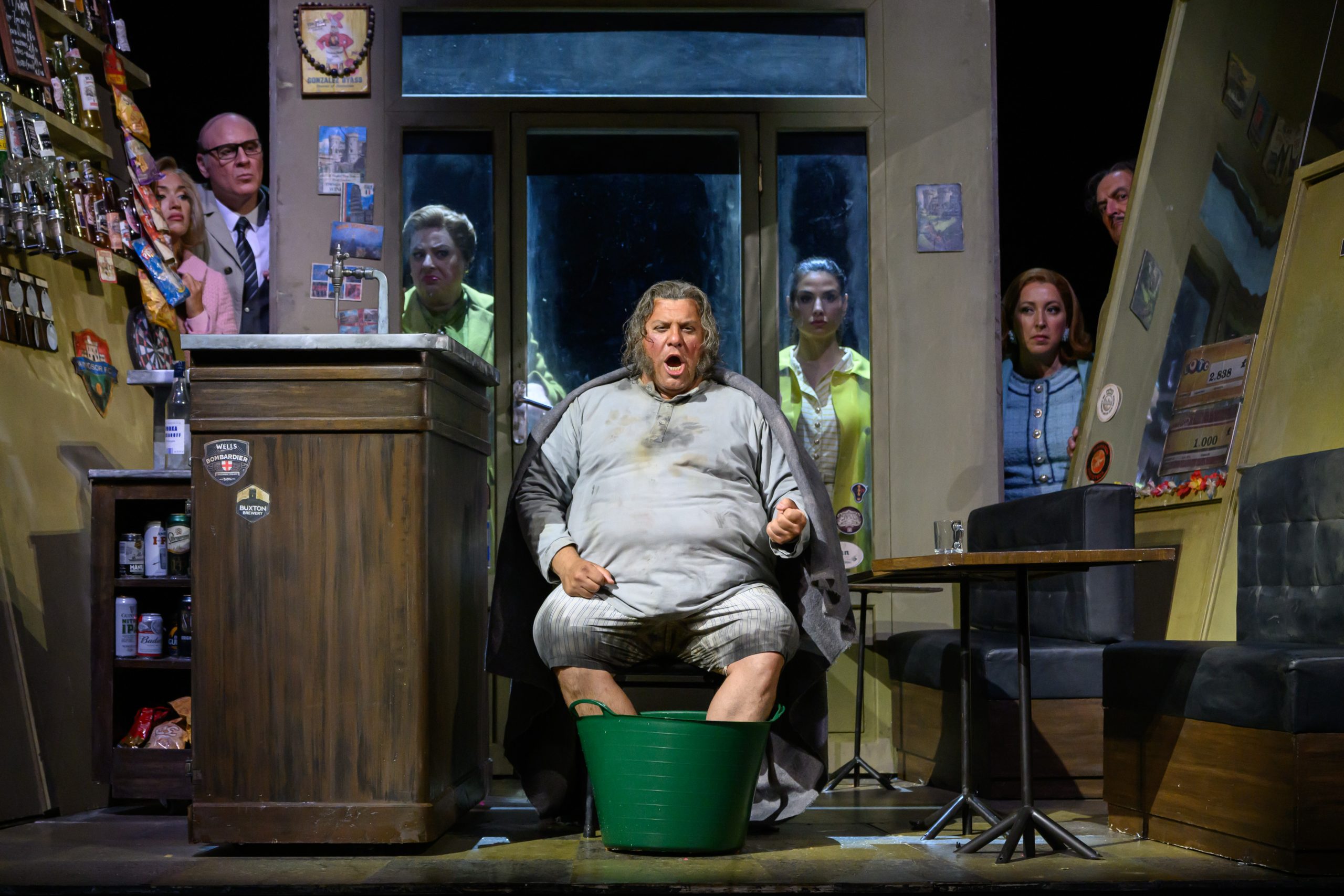
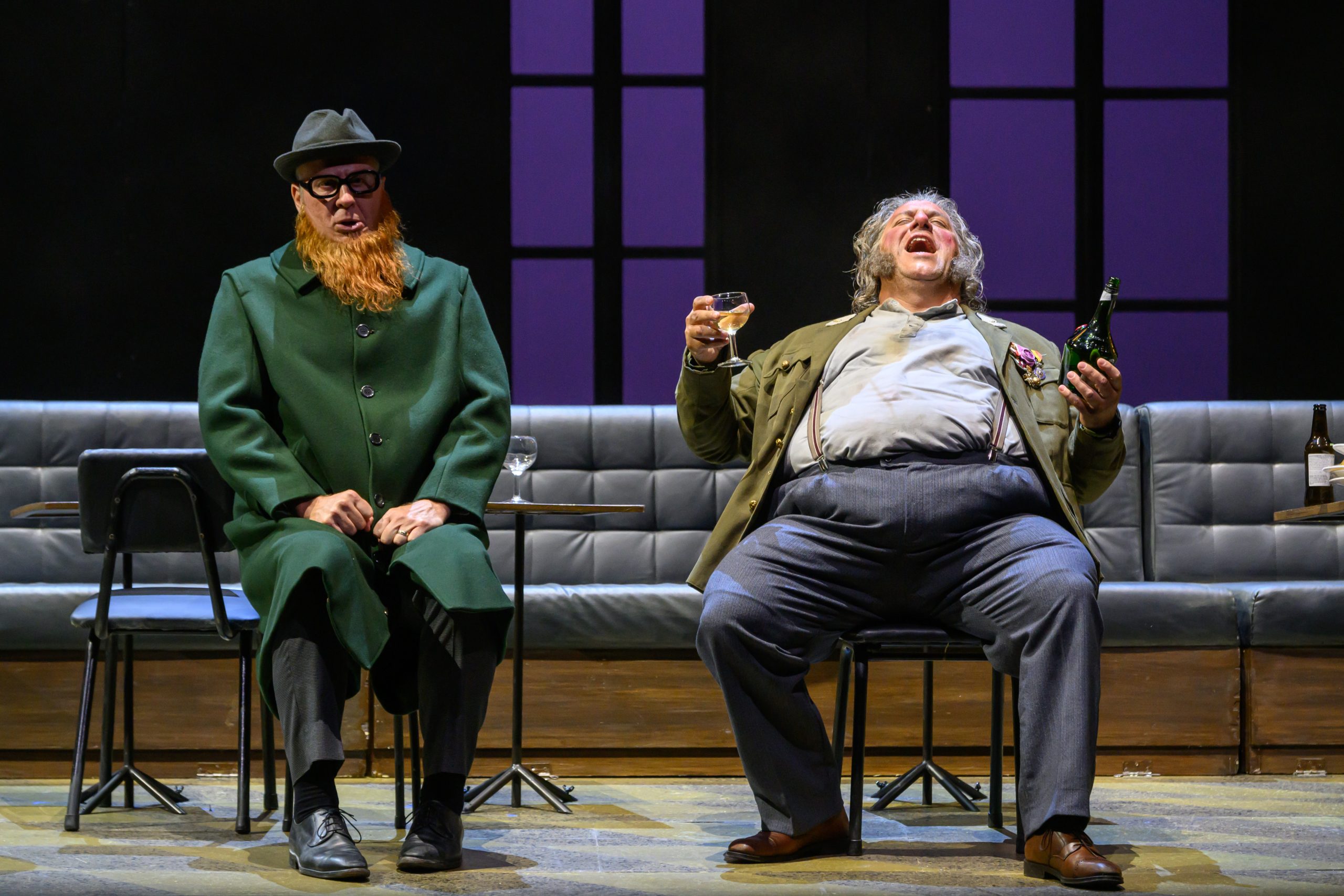
Opening night featured an outstanding principal cast. In the title role, Luca Salsi once again demonstrated why he is regarded as one of today’s foremost interpreters of Sir John Falstaff. His impeccable diction and richly nuanced characterisation created a deeply human Falstaff, balancing comedy and melancholy with remarkable intelligence.
American baritone Lucas Meachem portrayed Ford with meticulous vocal and musical preparation. His performance reached its peak in the great monologue “È sogno? o realtà?”, delivered with compelling dramatic intensity, an assured vocal line, and an impressive command of the character’s psychological complexity.
Fenton was sung by Santiago Ballerini, whose beautiful tenor timbre and refined musicality stood out throughout the evening. He formed an engaging partnership with Catalan soprano Serena Sáenz, whose Nannetta radiated freshness, warmth, and youthful charm. She approached the role with complete ease and crowned her performance with a beautifully shaped “Sul fil d’un soffio etesio” in the final act.
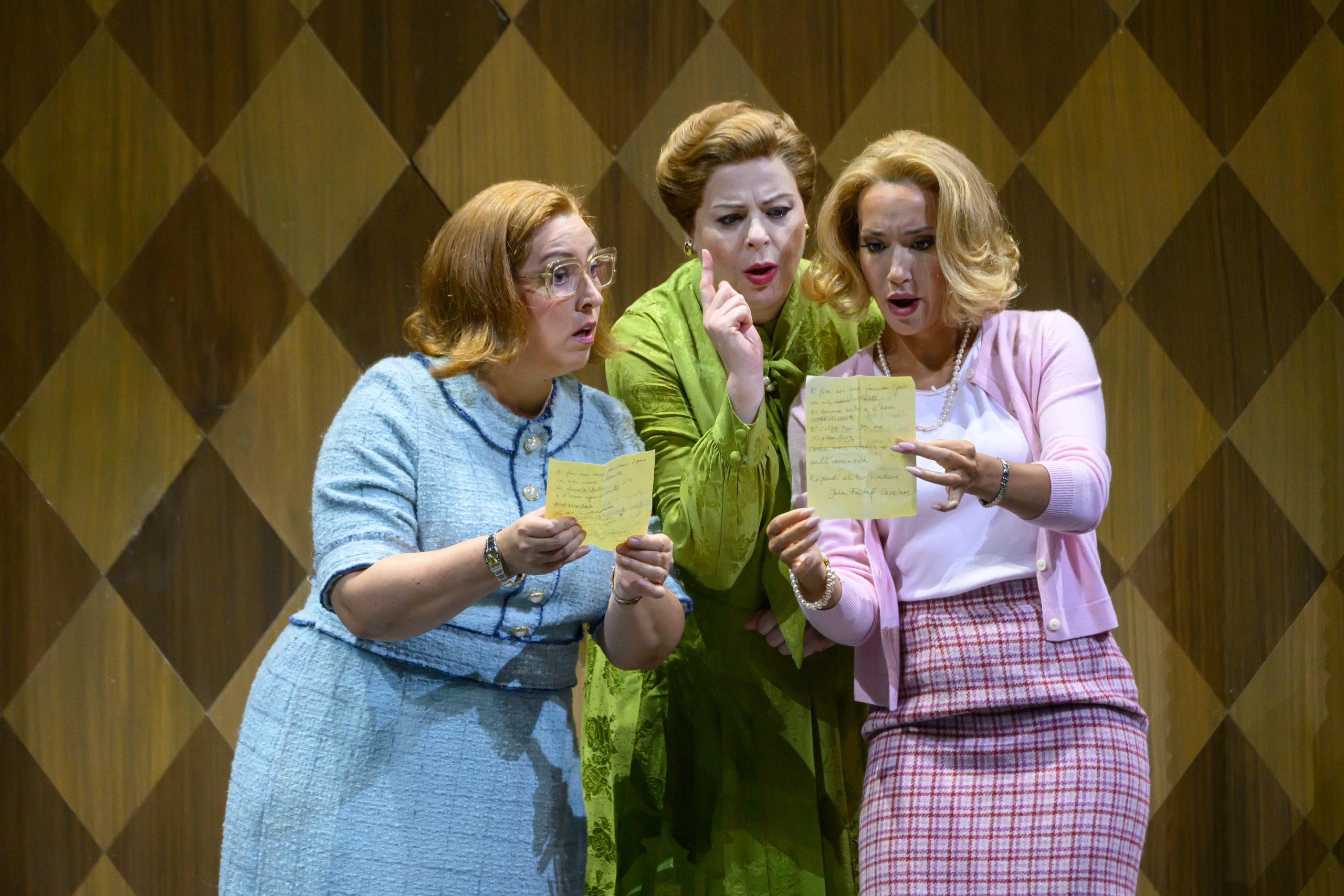
Carolina López Moreno was an accomplished Alice Ford, combining the warm colours of her lyric soprano with a finely observed dramatic portrayal, resulting in a performance of elegance, vitality, and theatrical conviction.
As Mrs. Quickly, Daniela Barcellona delivered one of the evening’s most memorable performances. Her masterful blend of wit, authority, and comic timing won over the audience from her very first entrance. Alongside her, Gemma Coma-Alabert offered a poised and engaging Mrs. Meg Page, completing with assurance the quartet of Windsor’s resourceful women.
Falstaff’s loyal companions were vividly portrayed by Alessio Cacciamani (Pistola), whose rich timbre and solid vocal projection made a strong impression, and Pablo García-López (Bardolfo), whose clear voice, excellent diction, and expressive acting contributed significantly to the opera’s comic energy. Josep Fadó completed the cast as Dr Caius, bringing assurance and theatrical flair to a role central to the opera’s intricate web of misunderstandings.
The theatrical success of Falstaff could hardly have been entrusted to better hands than those of stage director Laurent Pelly. His reading of Verdi’s comedy is distinguished by a production of remarkable naturalness and elegance, built upon fluid stage movement and an intelligent use of multiple scenic planes that constantly reinforces narrative clarity and dramatic momentum. Pelly possesses the rare gift of transforming apparent simplicity into stagecraft of complete naturalness. Every one of his productions becomes an exercise in dramatic clarity, illuminating the essence of the work without ever imposing itself upon it.
Barbara de Limburg’s magnificent set designs contribute decisively to this achievement. Their evocative palette recalls Edward Hopper’s Nighthawks, while Joël Adam‘s refined lighting lends warmth, atmosphere, and visual coherence to every scene.
With an inevitable sense of nostalgia, Josep Pons took his leave as Music Director of the Gran Teatre del Liceu, a position he had held since 2012. Under his baton, the orchestra once again displayed an extraordinary richness of timbre and an exceptionally broad palette of orchestral colours, always at the service of the drama. Particularly admirable was his control of dynamics, allowing the singers to project with complete naturalness and balance while never sacrificing the density and sophistication of Verdi’s orchestral writing.
SPANISH
Tutto nel mondo è burla!
«Hay una sola manera de terminar mejor una carrera que con Otello: con la victoria de Falstaff.» Con estas palabras se dirigía Arrigo Boito, libretista de Falstaff, a Giuseppe Verdi en una de sus cartas, convencido de que solo una gran comedia podía superar el éxito de la tragedia shakespeariana. Y, efectivamente, fue con la victoria de Falstaff como el Gran Teatre del Liceu puso el pasado 9 de julio el broche final a su temporada operística, clausurando al mismo tiempo una etapa: la de Josep Pons al frente de la dirección musical del teatro.
Verdi estaba convencido de que Aida sería su despedida de la ópera. Entre el estreno de Aida (1871) y el inicio de la composición de Otello (1887), culminada posteriormente con Falstaff (1893), transcurrieron dieciséis años que la historiografía ha presentado con frecuencia como un largo silencio creativo. Sin embargo, más que un bloqueo compositivo, aquel periodo respondió al deseo de preservar el extraordinario nivel artístico alcanzado. Tras una carrera excepcional, Verdi solo estaba dispuesto a regresar al teatro ante un proyecto verdaderamente irresistible.
No fue el único compositor que atravesó un largo periodo de silencio. Rossini abandonó la composición operística durante décadas, y Sibelius dejó inacabada su Octava Sinfonía tras años de silencio creativo. El caso de Verdi, sin embargo, fue muy distinto: su aparente inactividad resultó extraordinariamente fértil desde el punto de vista intelectual. Como Wagner durante la gestación de El anillo del nibelungo, nunca dejó de alimentar su pensamiento artístico.
A la independencia económica —era ya un hombre inmensamente rico y gozaba de un prestigio universal— se sumaban la administración de su finca de Sant’Agata y diversos proyectos benéficos, entre ellos la Casa di Riposo per Musicisti, probablemente la iniciativa que mayor satisfacción personal le proporcionó. Durante esos años revisó obras anteriores, profundizó en la lectura de Shakespeare, siguió con atención la evolución de la ópera europea y mantuvo una intensa correspondencia con Arrigo Boito y Giulio Ricordi.
Fue precisamente Boito quien, tras el éxito de Otello, logró seducir de nuevo al compositor con un libreto inspirado en uno de los personajes más fascinantes del universo shakespeariano: Sir John Falstaff. Aunque nunca protagoniza una obra de Shakespeare, el personaje aparece de forma memorable en las dos partes de Enrique IV y en Las alegres comadres de Windsor. A partir de ese material, Boito construyó un libreto de extraordinaria inteligencia dramática que despertó en Verdi el deseo de regresar al teatro con una obra completamente nueva: una comedia de madurez que acabaría convirtiéndose en su luminoso testamento artístico.
La noche del estreno contó con un excelente primer reparto. En el papel de Sir John Falstaff, Luca Salsi volvió a demostrar por qué es uno de los grandes intérpretes actuales del personaje. Su impecable dicción y una caracterización llena de matices dieron forma a un Falstaff profundamente humano, equilibrando con inteligencia la comicidad y la melancolía.
El barítono estadounidense Lucas Meachem dio vida a Ford con un trabajo vocal y musical minuciosamente elaborado. Sobresalió especialmente en su gran soliloquio «È sogno? o realtà?», resuelto con intensidad dramática, sólida línea de canto y un admirable dominio de las inflexiones psicológicas del personaje.
Fenton fue interpretado por Santiago Ballerini, quien brilló por el bello timbre de su voz de tenor y su refinada musicalidad. Formó una pareja de gran compenetración con la soprano catalana Serena Sáenz, que encarnó a una Nannetta jovial, luminosa y llena de frescura. Abordó el papel con absoluta naturalidad y alcanzó uno de los momentos más inspirados de la velada en el bosque con el aria «Sul fil d’un soffio etesio».
Alice Ford estuvo interpretada por Carolina López Moreno, cuya hermosa voz de soprano lírica cautivó tanto por la riqueza de su color vocal como por una cuidada construcción teatral del personaje, ofreciendo una interpretación llena de vitalidad y elegancia.
Daniela Barcellona, en el papel de Mrs. Quickly, firmó una magnífica interpretación desde el punto de vista escénico. Su combinación de sarcasmo, autoridad y sentido del humor conquistó al público desde su primera aparición. A su lado, Gemma Coma-Alabert dio vida a Mrs. Meg Page con una interpretación sólida y natural, completando con acierto el cuarteto de las ingeniosas mujeres de Windsor.
Los inseparables secuaces de Falstaff estuvieron encarnados por Alessio Cacciamani (Pistola), poseedor de un timbre rico y una sólida proyección vocal, y Pablo García-López (Bardolfo), cuya voz clara, excelente dicción y expresiva caracterización contribuyeron decisivamente al carácter cómico de la obra. Completó el reparto Josep Fadó como el Doctor Cajus, desempeñando con solvencia un papel fundamental dentro de los continuos enredos de la trama.
El peso teatral de Falstaff no podía recaer en mejores manos que las del director de escena Laurent Pelly. Su lectura de esta comedia verdiana se caracteriza por una puesta en escena de un naturalismo tan preciso como elegante, construida a partir de un dinámico movimiento escénico y de una inteligente distribución de los personajes en distintos planos, favoreciendo en todo momento la claridad narrativa y el ritmo dramático. Pelly posee la extraordinaria capacidad de convertir lo aparentemente sencillo en una lógica escénica de absoluta naturalidad. Cada una de sus producciones se convierte en un ejercicio de claridad que acerca al espectador al verdadero sentido de la obra.
A ello contribuye decisivamente la magnífica escenografía de Barbara de Limburg, concebida en una sugerente paleta cromática que evoca la atmósfera de Nighthawks, de Edward Hopper, y realzada por la refinada iluminación de Joël Adam.
Con una inevitable sensación de nostalgia, Josep Pons se despidió de la dirección musical del Gran Teatre del Liceu, responsabilidad que ha ejercido desde 2012. Bajo su batuta, la orquesta volvió a desplegar una extraordinaria riqueza tímbrica y una amplísima gama de colores orquestales, siempre al servicio del discurso dramático. Especialmente admirable fue el control de las dinámicas, que permitió a las voces proyectarse con naturalidad y equilibrio sin renunciar en ningún momento a la densidad y el refinamiento de la escritura verdiana.
Photo credits: Antoni Bofill